
wellness
10-Minute Morning Routine That Changes Everything
A realistic morning routine that fits into busy life — no 5am wake-up calls required. Just 10 focused minutes that set the tone for the day.
Read more →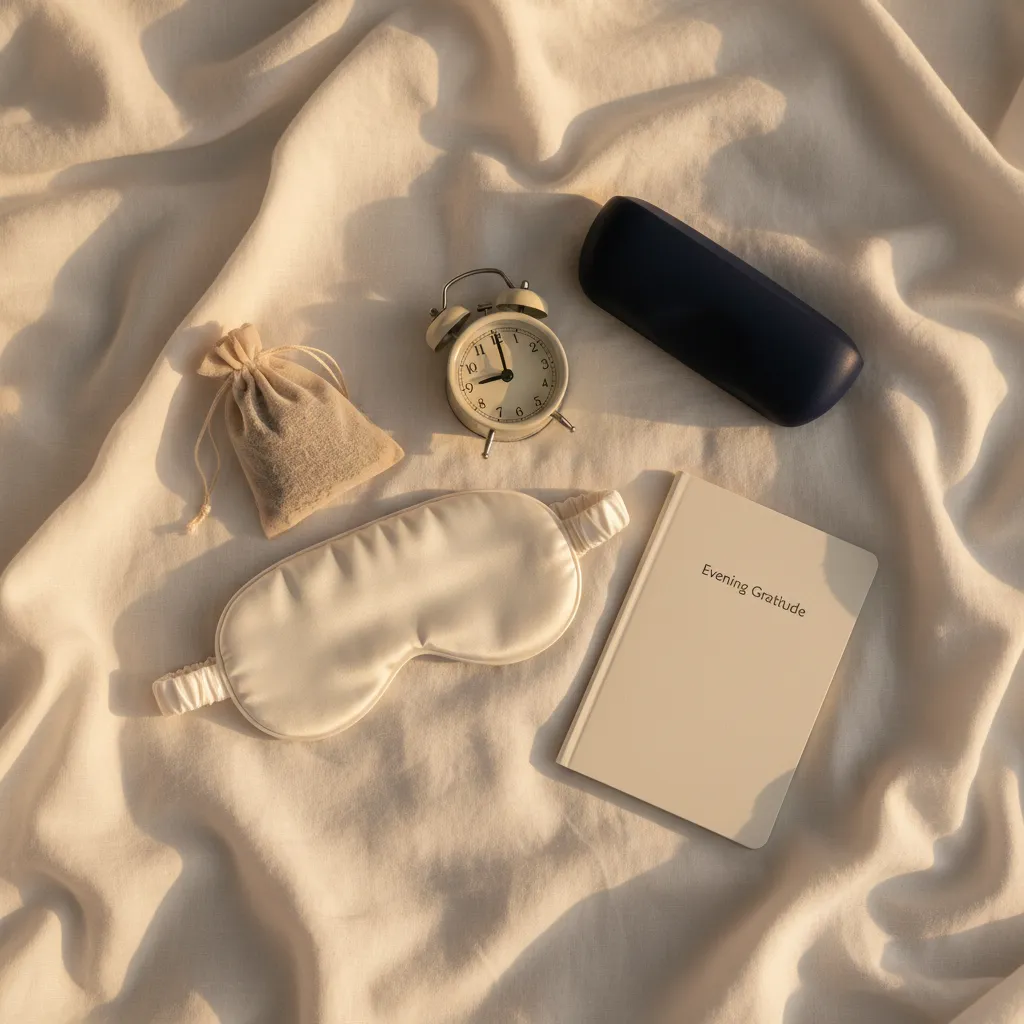
📋 Quick Summary
Poor sleep is one of the most common complaints among women in their 40s and 50s — and one of the most underaddressed. Sleep issues in midlife aren’t just about being tired. Chronic poor sleep is associated with increased inflammation, faster cognitive aging, higher cortisol, impaired immune function, and accelerated skin aging.
The phrase “sleep hygiene” refers to the collection of habits and environmental factors that support quality sleep. Most people know the basics but underestimate how much each individual factor matters. These are the ones with the most impact.
This is one of the most consistent findings in sleep research, and one of the most overlooked: your body temperature needs to drop about 1–2 degrees Fahrenheit to initiate and maintain deep sleep. If your bedroom is too warm, your body struggles to accomplish this drop, and you stay in lighter, less restorative sleep stages.
The recommended sleep temperature range is 60–67°F (15–19°C). Most people’s homes are warmer than this, especially in summer. If you share a bed with a partner who runs hot, this negotiation can be challenging — a dual-zone electric blanket (each side controlled separately) solves this problem.
Additional strategies for staying cool:
Artificial blue light — the specific wavelength emitted by phone screens, tablets, laptops, and LED lights — suppresses melatonin production. Melatonin is the hormone that signals to your body that it’s time to sleep. Under natural conditions, melatonin rises in the evening as light decreases. Staring at a bright phone screen at 10 p.m. sends the opposite signal.
Research suggests that bright screen exposure in the two hours before bed can delay melatonin onset by one to three hours — meaning your body physiologically isn’t ready to sleep as early as it would be otherwise.
Practical steps:
This is consistently ranked as the most impactful single factor for sleep quality, yet it’s the one most people sacrifice most often — staying up later on weekends, sleeping in when they can.
Your circadian rhythm is essentially an internal 24-hour clock that regulates dozens of physiological processes, including sleep-wake timing, hormone release, and body temperature. This clock is calibrated primarily by light exposure and by the timing of sleep and waking. When you’re consistent, the clock runs accurately: you feel sleepy at the right time, fall asleep easily, and wake up feeling rested. Inconsistency throws the clock off — what’s called “social jet lag.”
The practical rule: pick a wake-up time that you can maintain every day of the week, including weekends. Even if you go to bed later on Friday night, keeping the same wake-up time maintains the rhythm. You may feel tired on Saturday morning, but you’ll sleep better Saturday night — which is better than the alternative of sleeping in and then struggling to fall asleep Saturday night.
Magnesium is involved in over 300 biochemical processes in the body, including several directly related to sleep: it activates the parasympathetic nervous system, regulates melatonin, and acts on GABA receptors (the same receptors targeted by sleep medications and benzodiazepines, though much more gently).
Magnesium deficiency is remarkably common — surveys suggest that a majority of Americans don’t get adequate magnesium through diet. Symptoms can include muscle cramps, restlessness, anxiety, and poor sleep.
Forms of magnesium for sleep:
A typical dose for sleep support is 200–400mg of magnesium glycinate, taken 30–60 minutes before bed. It’s not sedating but supports the physiological conditions for deeper sleep over time.
Dietary sources of magnesium: dark leafy greens, pumpkin seeds, dark chocolate, almonds, and legumes.
Your nervous system responds to patterns and cues. A consistent evening routine acts as a multi-step signal that sleep is approaching, which helps your body begin the physiological preparations — cooling, melatonin release, slowing heart rate — in advance.
A practical evening routine that takes 30–45 minutes:
8:30 p.m.: Dim the lights in your home. Switch to warm lighting only. Put the phone on do-not-disturb.
8:45 p.m.: Light activity only — reading a physical book or magazine, gentle stretching, journaling, light tidying. Nothing involving problem-solving or emotionally stimulating content (no news, no stressful conversations if avoidable).
9:00 p.m.: Skincare routine. This is a good time because applying products is tactile and calming, and it becomes part of the sleep signal.
9:15 p.m.: Herbal tea if desired — chamomile, passionflower, or a commercial sleep blend. The warm liquid and any mild sedative compounds in the herbs support relaxation.
9:30 p.m.: In bed, lights off or near-off. A few minutes of the 4-7-8 breathing exercise or a body scan meditation (lie still and progressively relax each body part from feet to head).
The exact contents of the routine matter less than its consistency. After two to three weeks of the same sequence at the same time, your body will begin initiating sleep onset while you’re still mid-routine.
Waking during the night is normal — adults naturally move through lighter sleep phases several times a night, and brief waking is common. The problem is when you can’t get back to sleep.
Avoid lying awake trying to force sleep. After 20–25 minutes, get up and go to a dim room. Do something calm and unstimulating (reading, light stretching, journaling about mundane topics) until you feel sleepy, then return to bed. This sounds counterproductive, but it prevents your brain from associating the bed with wakefulness — a pattern called conditioned arousal that perpetuates chronic insomnia.
Keep the room dark and avoid checking your phone. Even a brief screen exposure in the middle of the night can significantly suppress melatonin for the remainder of the night. → Explore more in our Wellness Hub.
wellness
A realistic morning routine that fits into busy life — no 5am wake-up calls required. Just 10 focused minutes that set the tone for the day.
Read more →
wellness
Seven wellness habits for busy moms — from morning hydration to a wind-down routine — with tips for making each one stick automatically.
Read more →
wellness
A grounded guide to gut health supplements for women over 40 — probiotics, prebiotics, fiber, L-glutamine, and enzymes explained without the hype.
Read more →
Get access to my VIP newsletter with health tips, special deals, my free ebook on Seven Small Easy Habits and so much more!