
wellness
10-Minute Morning Routine That Changes Everything
A realistic morning routine that fits into busy life — no 5am wake-up calls required. Just 10 focused minutes that set the tone for the day.
Read more →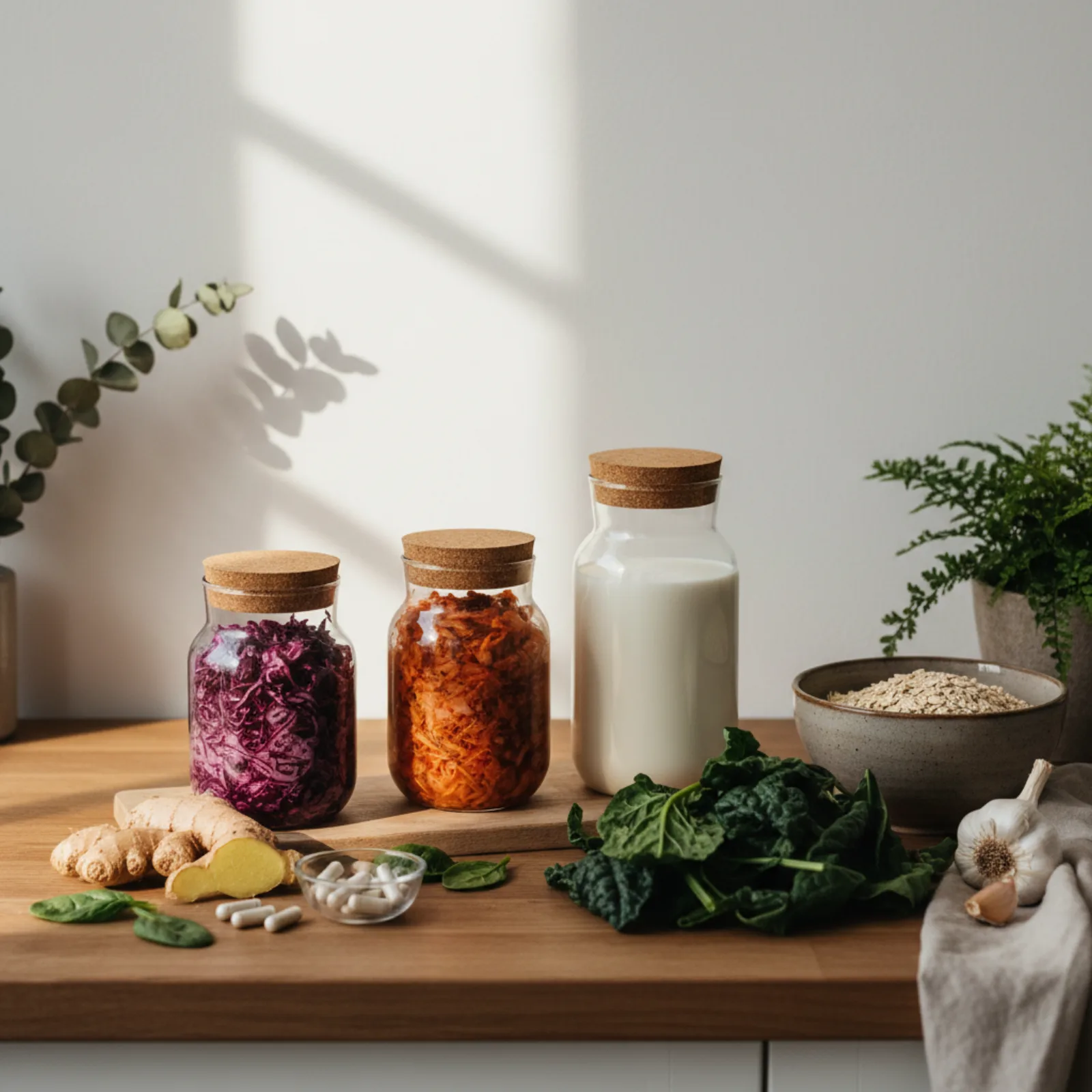
If you’ve noticed that your digestion has quietly changed in your forties — more bloating, less regularity, sudden sensitivities to foods you used to tolerate easily — you’re in very good company. The gut doesn’t stay the same throughout life, and the years around perimenopause and menopause bring real, measurable shifts that can make your old eating habits feel like they stopped working overnight.
The good news is that gut health is one of the most responsive areas of the body. Small, consistent changes — including thoughtful use of gut health supplements — can make a meaningful difference in how you feel day to day. This guide walks through what actually matters, what the research supports, and how to approach supplements without falling for marketing noise.
Always consult your healthcare provider before starting new supplements, especially if you take medications or have existing conditions.
Your gut microbiome — the trillions of bacteria, fungi, and other microbes living in your digestive tract — plays a role in digestion, immune function, mood regulation, and even how your body handles hormones. Around midlife, several things shift at once.
Estrogen levels begin to fluctuate and then decline during perimenopause and menopause, and estrogen interacts closely with the gut microbiome through a collection of bacteria sometimes called the “estrobolome.” Changes here can influence everything from bloating to weight distribution to mood (Source: https://www.ncbi.nlm.nih.gov/pmc/articles/PMC9717838/). Metabolism also slows gradually with age, and the muscles of the digestive tract can become less efficient, which is part of why constipation becomes more common after 40 (Source: https://www.mayoclinic.org/diseases-conditions/constipation/symptoms-causes/syc-20354253).
On top of that, the diversity of the microbiome tends to decline with age, and lower diversity is associated with reduced resilience to stress, illness, and dietary changes (Source: https://www.nccih.nih.gov/health/probiotics-what-you-need-to-know). None of this is a crisis — it’s a signal that your gut deserves a bit more intentional support than it may have needed in your twenties.
If you want a foundational wellness read alongside this, the fiber-rich basics in our guide to chia seeds are a natural starting point.
Walk into any supplement aisle and the options can feel overwhelming. In practice, most gut-supporting supplements fall into five buckets, each doing something slightly different.
Probiotics are live microorganisms — usually specific strains of Lactobacillus and Bifidobacterium — intended to support the existing microbial community in your gut. The National Center for Complementary and Integrative Health notes that probiotics may help with certain digestive conditions, though effects depend heavily on the strain and dose (Source: https://www.nccih.nih.gov/health/probiotics-what-you-need-to-know).
Two things to look for on a label:
A multi-strain probiotic from a reputable brand is a sensible starting place for most women. If you’re on antibiotics, your provider may suggest a targeted product during and after the course.
Prebiotics are the fibers and compounds that feed the beneficial bacteria already living in your gut. Common forms include inulin, fructooligosaccharides (FOS), and galactooligosaccharides (GOS). Research suggests prebiotics can support microbial diversity and improve stool regularity when consumed consistently (Source: https://www.hsph.harvard.edu/nutritionsource/microbiome/).
The trade-off: prebiotic supplements can cause gas and bloating, especially at the start. Lower doses and slow ramp-ups tend to be better tolerated than jumping straight to the full recommended serving.
Soluble and insoluble fiber both play a role in gut health, but they do different jobs. Soluble fiber (psyllium husk, for example) forms a gel that can help regulate bowel movements and support healthier cholesterol levels. Insoluble fiber adds bulk and supports regularity.
Harvard’s nutrition source notes that most American adults fall well short of recommended fiber intake, which is roughly 25 grams per day for women (Source: https://www.hsph.harvard.edu/nutritionsource/carbohydrates/fiber/). A simple psyllium supplement is inexpensive, well-studied, and useful as a bridge while you work on getting more fiber from food.
L-glutamine is an amino acid that’s sometimes marketed for “leaky gut” — a term that isn’t a formal medical diagnosis, though the underlying concept of intestinal permeability is a legitimate area of research. Glutamine is a primary fuel source for the cells lining the small intestine, and some research suggests it may support the integrity of the intestinal barrier, particularly in contexts of stress or illness (Source: https://www.ncbi.nlm.nih.gov/pmc/articles/PMC5454963/).
For healthy adults eating enough protein, the practical benefit of supplementing glutamine is less clear. It’s generally considered safe at typical doses, but it’s not a must-have for everyone.
Digestive enzymes (amylase, protease, lipase, lactase, and others) help break down carbohydrates, proteins, and fats. Some people — particularly those with specific conditions like lactose intolerance or pancreatic insufficiency — benefit from targeted enzyme supplements. For general healthy digestion, broad-spectrum enzyme blends can feel helpful after heavy meals, though the evidence for routine use in otherwise healthy adults is mixed (Source: https://my.clevelandclinic.org/health/treatments/digestive-enzymes).
If you consistently feel bloated or uncomfortable after eating, that’s worth discussing with a provider rather than self-treating with enzymes long-term.
It’s tempting to reach for a bottle, but food-based gut support is often more effective and more sustainable. Fermented foods and fiber-rich plants do much of what supplements promise, and they bring along the vitamins, minerals, and phytonutrients that capsules can’t replicate.
Fermented foods that contain live cultures:
Prebiotic-rich foods:
A Harvard review of microbiome-supportive eating emphasizes that diet diversity — the sheer number of different plant foods you eat in a week — is one of the strongest predictors of a varied, resilient gut microbiome (Source: https://www.hsph.harvard.edu/nutritionsource/microbiome/). A practical target many researchers cite is around 30 different plant foods per week, counting herbs, spices, nuts, seeds, beans, grains, fruits, and vegetables.
For more everyday wellness practices that pair well with gut-focused eating, browse our full wellness section.
Your digestive system is remarkably communicative if you pay attention. Symptoms that may signal your gut health could use some support include:
None of these symptoms alone means something is wrong, but persistent patterns are worth paying attention to — and worth bringing up with your healthcare provider, particularly if you see blood in your stool, unexplained weight loss, or severe pain, which warrant prompt medical evaluation (Source: https://www.mayoclinic.org/diseases-conditions/irritable-bowel-syndrome/symptoms-causes/syc-20360016).
If you’re new to this, resist the urge to buy seven bottles at once. A sustainable approach looks something like this:
Weeks 1–2: Food foundations. Add one fermented food to your daily routine — a small scoop of sauerkraut at lunch, a cup of kefir in a smoothie, a side of kimchi with dinner. At the same time, aim for two or three new plant foods per week: a different grain, a new vegetable, a handful of seeds.
Weeks 3–4: Increase fiber gradually. Work toward the 25-gram daily target by adding ground flaxseed or chia to oatmeal, swapping white rice for barley or farro a few times a week, and including beans in at least two meals. Drink more water as fiber goes up — this helps avoid the discomfort that sometimes accompanies fiber increases.
Week 5 onward: Consider a supplement if needed. If you’ve been consistent with food changes and still feel like something is off, a simple multi-strain probiotic or a psyllium fiber supplement is a reasonable next step. Start with one supplement at a time so you can tell what’s actually helping.
Listen to your body. Some mild changes in digestion — a bit more gas, a shift in bowel patterns — are normal as your microbiome adjusts. Persistent discomfort, pain, or worsening symptoms mean it’s time to step back and check in with a provider.
Amazon offers a wide range of well-reviewed options if you decide to try a probiotic or fiber supplement; look for third-party tested products with clearly listed strains and CFU counts rather than flashy packaging.
Gut health after 40 isn’t about chasing trends or stacking supplements — it’s about giving a system that’s changed a bit more intentional care. Food diversity, fermented foods, adequate fiber, and a thoughtfully chosen probiotic cover most of what most women need. Save the rest of the supplement aisle for situations where you have a specific reason and ideally a professional to help you make the call.
If you take one thing from this guide, let it be this: the gut responds to consistency. Small daily choices, repeated over weeks and months, will do more than any single bottle on the shelf.
wellness
A realistic morning routine that fits into busy life — no 5am wake-up calls required. Just 10 focused minutes that set the tone for the day.
Read more →
wellness
Seven wellness habits for busy moms — from morning hydration to a wind-down routine — with tips for making each one stick automatically.
Read more →
wellness
Real talk about perimenopause and hormone shifts: Discover practical dietary and lifestyle changes to balance hormones naturally without prescriptions.
Read more →
Get access to my VIP newsletter with health tips, special deals, my free ebook on Seven Small Easy Habits and so much more!