
wellness
10-Minute Morning Routine That Changes Everything
A realistic morning routine that fits into busy life — no 5am wake-up calls required. Just 10 focused minutes that set the tone for the day.
Read more →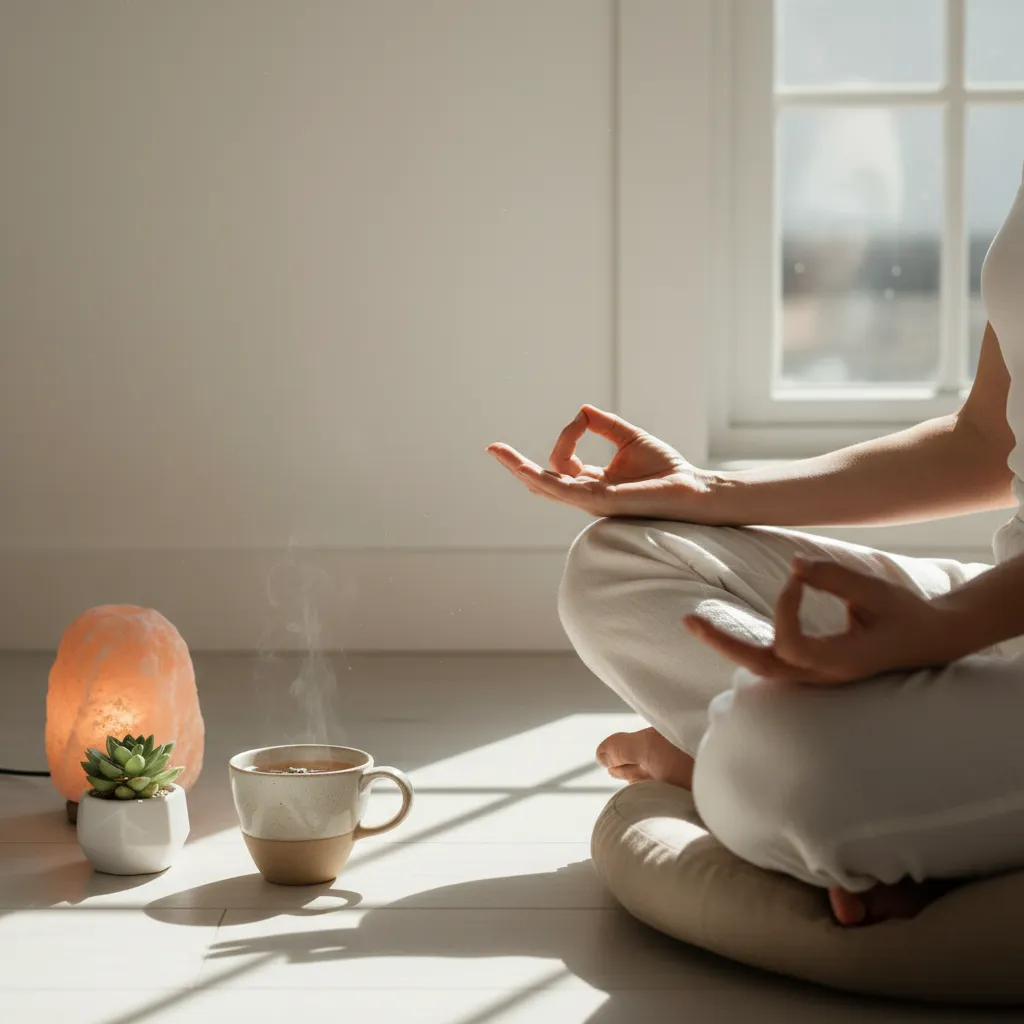
📋 Quick Summary
Mindfulness has been covered so extensively in the last decade that it’s easy to roll your eyes at it. It’s been sold as everything from a stress cure to a business productivity tool, and a lot of the messaging has become vague to the point of meaninglessness.
But underneath the marketing, the practice itself is genuinely useful — and the research supporting it is now substantial enough to take seriously. This guide strips away the wellness-speak and explains what mindfulness actually is, why it works, and gives you three concrete exercises to start with today.
The simplest definition: mindfulness means paying attention to what’s happening right now, on purpose, without immediately judging it or trying to change it.
That’s it. There’s no required sitting position, no specific breathing technique you must master, no app subscription needed. You can practice mindfulness washing dishes, walking to your car, or waiting in the school pickup line.
The opposite of mindfulness — which describes most of daily life — is what’s sometimes called “autopilot mode.” You’re doing one thing while thinking about something else: driving while mentally rehearsing a difficult conversation, eating lunch while scrolling your phone, talking to your child while thinking about your to-do list. This isn’t laziness or failure; it’s how the human brain defaults. We have a remarkable capacity for mental time travel — replaying the past and planning for the future — and it’s useful. But when it’s constant and involuntary, it generates chronic stress and prevents genuine rest.
Mindfulness practice trains the ability to notice when your attention has wandered and bring it back to the present. The training itself — the noticing and returning — is the practice. It’s not about achieving a blank mind.
The research base for mindfulness is now large enough to be meaningful. Studies consistently show that regular mindfulness practice produces measurable changes in:
For moms specifically, a few studies have focused on mindfulness-based interventions and found reductions in parenting stress, improved emotional regulation in difficult parenting moments, and better sleep.
The mechanism underlying most of these benefits is the same: you’re training yourself to notice your mental state as it’s happening, rather than being swept along by it. This creates a pause — however brief — between stimulus and response. That pause is where choice lives.
This is the most accessible entry point for mindfulness, requiring no special setup and very little time.
When to do it: First thing in the morning, or any moment during the day when you feel overwhelmed or scattered.
Instructions:
This exercise interrupts the momentum of a chaotic day and creates a brief reset. With practice, it becomes available as a “pause button” you can use in moments of high stress — before a difficult phone call, during a heated moment with your kids, or when anxiety spikes.
The body scan is one of the most widely used mindfulness exercises, commonly practiced in Mindfulness-Based Stress Reduction (MBSR) programs. It systematically moves attention through different parts of the body, building awareness of physical sensations.
For moms, the body scan works particularly well at bedtime or during a brief rest period — it naturally induces relaxation and helps discharge tension that’s accumulated physically during the day.
Instructions:
When your mind wanders — and it will, repeatedly — just notice that it has wandered and gently return to wherever you left off. This “noticing and returning” is the core skill being developed.
Breath meditation is the most classic mindfulness exercise and the foundation of most formal meditation traditions. Your breath is always available as an anchor to the present moment — it’s happening right now, and focusing on it brings your attention to the present by definition.
Instructions:
The number of times your mind wanders is not a measure of how well you’re meditating. A beginner’s mind wanders hundreds of times in five minutes. That’s normal. Each return to the breath is one repetition of the exercise — like a bicep curl for attention.
Mindfulness is a skill, and like any skill, it develops gradually with practice. The benefits — reduced reactivity, better sleep, improved focus, greater emotional regulation — tend to become noticeable after four to six weeks of daily practice, even if each session is only five minutes.
You won’t feel instantly calmer after your first session. Some people find the first few sessions frustrating because sitting still with their thoughts is uncomfortable. This discomfort is part of the process — you’re encountering the habits of your own mind, many of which have been running on autopilot for years.
The most useful attitude to bring to the practice: curiosity rather than judgment. You’re not trying to achieve anything or reach a particular state. You’re just looking, as clearly and honestly as you can, at what’s already happening. → Explore more in our Wellness Hub.
wellness
A realistic morning routine that fits into busy life — no 5am wake-up calls required. Just 10 focused minutes that set the tone for the day.
Read more →
wellness
Seven wellness habits for busy moms — from morning hydration to a wind-down routine — with tips for making each one stick automatically.
Read more →
wellness
A grounded guide to gut health supplements for women over 40 — probiotics, prebiotics, fiber, L-glutamine, and enzymes explained without the hype.
Read more →
Get access to my VIP newsletter with health tips, special deals, my free ebook on Seven Small Easy Habits and so much more!