Meal prep is one of those practices that most people intend to do but don’t actually sustain, because the approach they’re using requires too much time or too much decision-making. A four-hour Sunday cooking marathon with 12 containers of identical food is sustainable for about two weeks before it starts feeling like a chore.
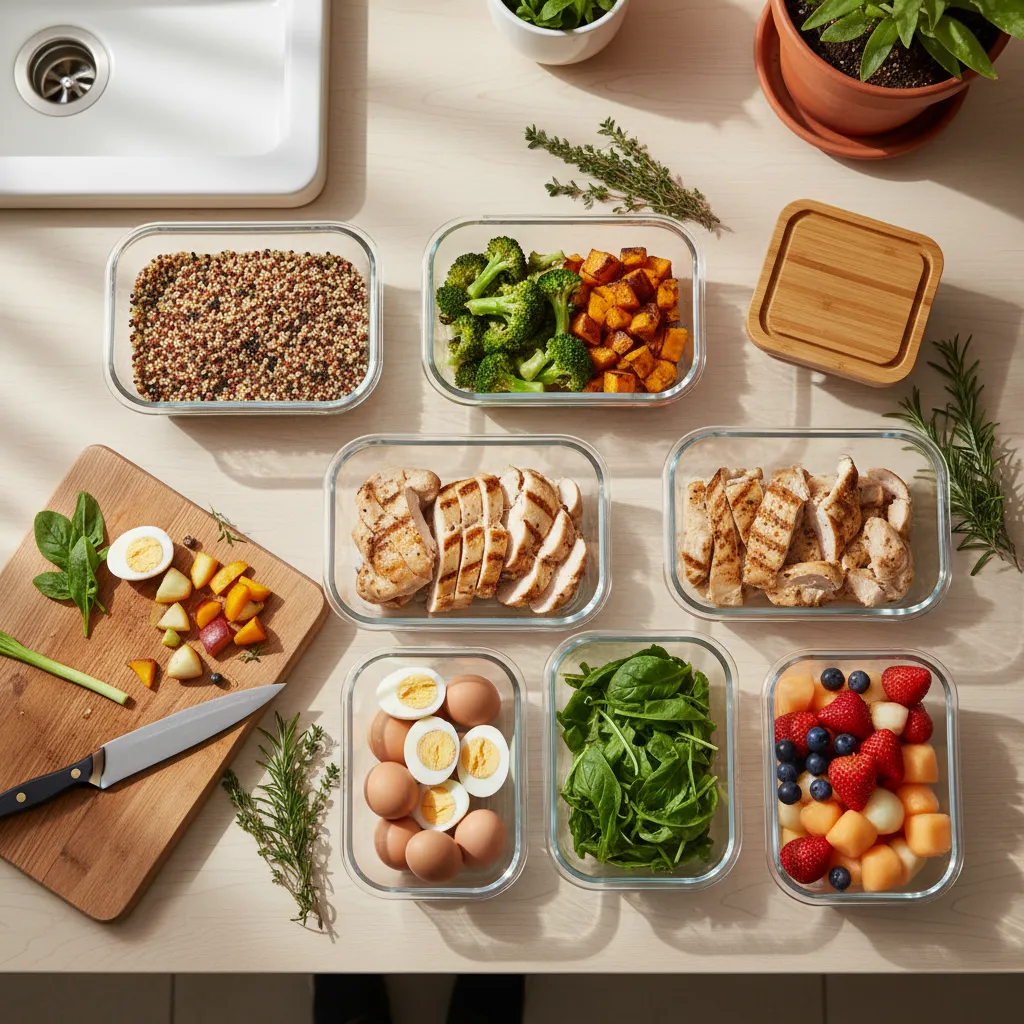
This guide takes a different approach: component prep instead of full meal prep. You prepare the building blocks — grains, proteins, vegetables, snacks — and assemble them into different combinations throughout the week. It takes about two hours on Sunday and makes weekday meals significantly easier without locking you into eating the same thing every day.
The Foundation: What to Prep and Why
The goal is to have four categories of food ready to go in your fridge by Sunday evening:
- A cooked grain — the base for bowls, sides, and salads
- A prepared protein — the most time-consuming part of weekday cooking, handled in advance
- Washed and prepped vegetables — for salads, sides, roasting, or stir-frying on demand
- Ready-to-grab snacks — the thing that most often leads to poor snack choices is the friction of preparation
You don’t need to prep all four every week. Start with whichever two categories cause you the most weekday friction.
Step 1: Cook a Grain (25-30 minutes, mostly hands-off)
Best options for the week:
- Brown rice: Cook a full pot (2 cups dry yields about 4–5 cups cooked). Brown rice keeps in the fridge for up to 5 days and freezes well.
- Quinoa: Rinse well before cooking (removes the bitter saponin coating). Cooks in 15 minutes. Excellent protein profile for a grain — contains all nine essential amino acids.
- Farro: Nuttier flavor, chewier texture, very filling. Takes about 30 minutes. Particularly good for grain bowls and salads.
- Oats: If breakfasts are the problem, make a large batch of overnight oats on Sunday — portion into jars with milk, chia seeds, and whatever toppings you prefer. Grab-and-go breakfasts for five days.
Sunday workflow: Put the grain on first. While it cooks, do everything else. Set a timer so you don’t forget it.
Storage: Cool completely before transferring to an airtight container. Spread on a baking sheet to cool faster if needed.
Step 2: Prepare a Protein (30-45 minutes)
Protein is the component that takes the longest to cook and often gets skipped on weeknight cooking because it requires active time. Batch-cooking protein on Sunday removes this barrier.
Sheet pan chicken thighs (the most versatile option):
- Season 6–8 bone-in, skin-on chicken thighs with olive oil, salt, pepper, and whatever spices you prefer (garlic powder, smoked paprika, cumin, Italian herbs — any direction works).
- Roast at 425°F (220°C) for 35–40 minutes until the skin is crispy and the thickest part reads 165°F internally.
- Remove skin before storing (it doesn’t reheat well). The meat keeps for 4–5 days.
Hard-boiled eggs:
- Bring a pot of water to a boil. Lower eggs gently into the water. Cook for 10 minutes for fully set yolks. Transfer to an ice bath immediately.
- Peel and store in water in the fridge (keeps them from drying out), or leave shells on. Either way, 5 days in the fridge.
- Hard-boiled eggs solve the high-protein snack and quick breakfast problem simultaneously.
Canned beans — technically no prep needed, but worth doing:
- Drain and rinse two cans of beans (chickpeas, black beans, and cannellini are the most versatile). Toss with a little olive oil, salt, and cumin or whatever flavor direction you want. Store in the fridge for up to 5 days.
- Ready to add to salads, grain bowls, or side dishes instantly.
Batch tofu (for plant-based weeks):
- Press a block of extra-firm tofu for 15–30 minutes (or use quick-pressing method: wrap in a towel and set a heavy pan on top). Cut into cubes.
- Toss with soy sauce, sesame oil, and garlic powder. Spread on a parchment-lined baking sheet.
- Bake at 400°F for 25–30 minutes, turning halfway, until golden and chewy.
- Keeps for 5 days. Add to rice bowls, salads, or stir-fries.
Step 3: Prep Vegetables (20-30 minutes)
The goal here is reducing the friction between buying vegetables and actually eating them. Vegetables that require washing, peeling, or chopping at the end of a long day rarely get eaten.
Wash and dry leafy greens:
- Fill your salad spinner with greens (romaine, mixed greens, arugula). Wash, spin dry, and store in the spinner or wrapped in a paper towel inside a bag. Crisp, ready-to-eat salad greens for the whole week.
- Wet greens go bad in 2–3 days; properly dried greens last 5–7 days.
Chop sturdy vegetables for the week:
- Slice bell peppers, celery, cucumber, radishes, and carrots. Store in containers with a damp paper towel to maintain crispness. These become instant snack vegetables or salad additions throughout the week.
Prep roastable vegetables:
- Cut broccoli into florets, slice cauliflower, quarter Brussels sprouts, dice sweet potato or butternut squash. Store raw in containers.
- These don’t need to be cooked in advance — just having them cut and ready means you can throw a tray in the oven in 5 minutes on a weeknight.
Spiralize or shred for quick sides:
- Shred a head of cabbage for slaws that last all week. Spiralize zucchini if you have a spiralizer — it can replace pasta in quick meals.
Step 4: Prep Snacks (15-20 minutes)
Snack prep is the highest-return investment of prep time for most families. The reason: unhealthy snack choices almost always happen because the healthy option requires even a small amount of preparation that feels like too much when hungry.
Portion nuts and trail mix:
- Divide nuts into small containers or snack bags (a 1-ounce serving, roughly a small handful). Having them pre-portioned prevents overeating and makes grabbing a snack effortless.
Hummus with vegetables:
- Make a batch of hummus (one can chickpeas, 2 tablespoons tahini, 1 garlic clove, lemon juice, olive oil, salt — blend until smooth). Or buy a quality store-bought version. Portion into small containers and pair with the prepped veggie sticks from above.
Energy bites (worth the 10-minute effort):
- Mix 1 cup rolled oats, ½ cup peanut or almond butter, ⅓ cup honey, ½ cup mini chocolate chips or raisins, 2 tablespoons chia seeds. Roll into tablespoon-sized balls. Refrigerate. Makes about 20 bites that keep for 2 weeks in the fridge.
Sliced fruit:
- Cut melon, pineapple, or mango into chunks and store in containers. Cut fruit is more likely to actually be eaten than whole fruit that requires effort to prepare.
The Two-Hour Sunday Workflow
To do all of this in approximately two hours:
- 0:00 — Start grain cooking on the stovetop. Preheat oven.
- 0:05 — Season and prepare protein for the oven. Put in oven.
- 0:15 — Wash and dry leafy greens. Store.
- 0:25 — Chop and prep raw vegetables. Store.
- 0:45 — Check grain, stir. Start making energy bites or hummus.
- 1:00 — Protein comes out. Prep hard-boiled eggs if making them.
- 1:10 — Portion nuts and snacks.
- 1:20 — Grain is done. Cool on baking sheet.
- 1:35 — Store all cooled items in labeled containers. Clean up.
- 2:00 — Done.
The key is that most of this is hands-off time. The grain and protein cook themselves; your active work is primarily washing, chopping, and portioning. Listen to a podcast or music and it doesn’t feel like work at all.
→ Explore more in our Recipes Hub.