TL;DR – Quick Summary
- Gentle physical exfoliants like sugar or oat flour work without damaging the skin barrier
- Two to three times per week is enough — over-exfoliation causes redness and sensitivity
- Always moisturize immediately after exfoliating and use SPF the following morning
The Question
Exfoliation removes the layer of dead skin cells that builds up on the surface, leaving skin looking dull and feeling rough. But with so many scrubs, acids, and tools on the market, it’s easy to overdo it — or choose something too harsh. What are the effective, natural options?
The Short Answer
Natural exfoliation works through two main approaches: gentle physical scrubs (ingredients like sugar, ground oats, or rice flour that physically lift dead cells) and mild natural acids found in foods like yogurt or honey that dissolve the bonds between dead cells. Both methods are effective when used two to three times per week — no more.
The Full Answer
Why Exfoliation Matters
Skin naturally sheds dead cells and replaces them with new ones — a process called cell turnover. In younger skin, this happens roughly every 28 days. As we age, this process slows, and dead cells can accumulate on the surface, making skin look dull, feel rough, and absorb moisturizer less effectively. Regular, gentle exfoliation speeds up this process and reveals the fresher skin underneath.
The key word is gentle. The goal is to assist a natural process, not to aggressively scrub the skin. Over-exfoliating strips the skin barrier and leads to redness, tightness, and increased sensitivity.
Natural Physical Exfoliants
Physical exfoliants use fine particles to manually lift dead skin cells. The best natural options are:
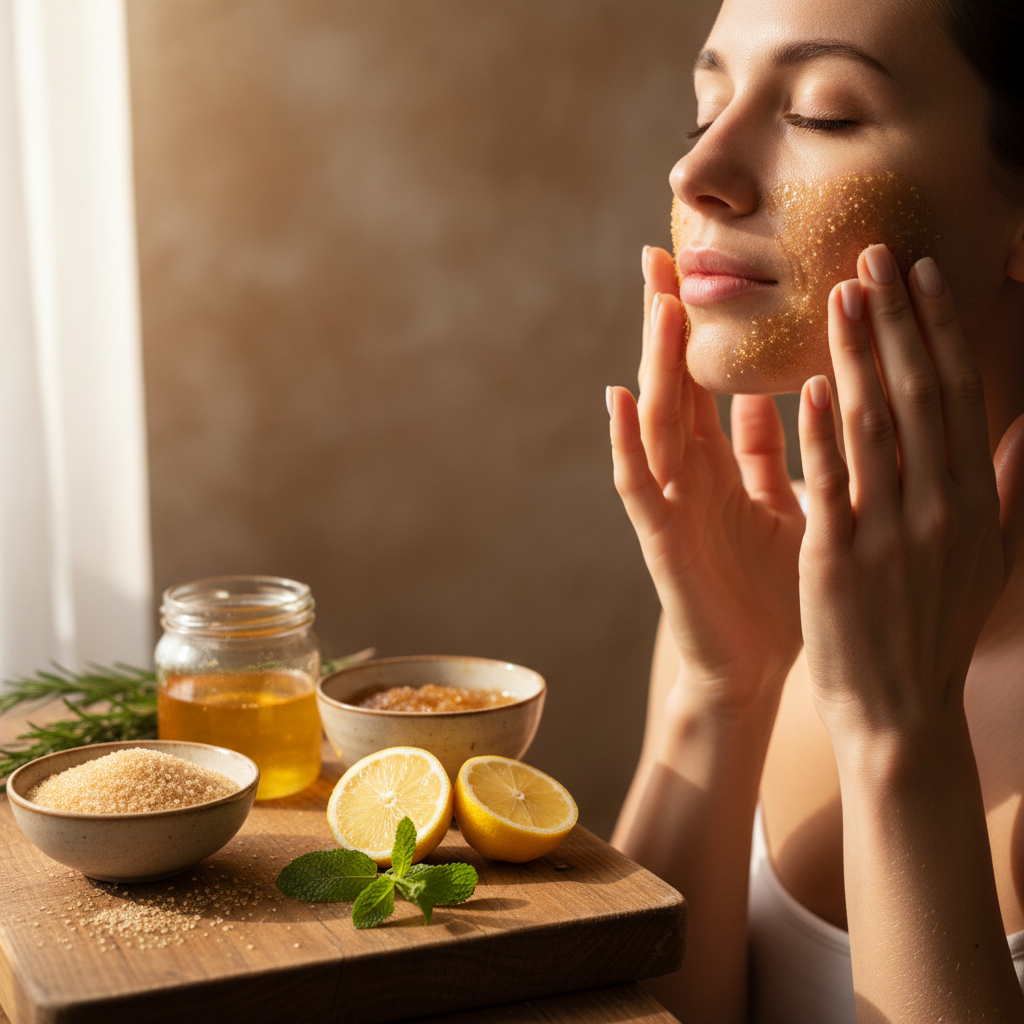
Fine sugar — white or brown sugar has rounded granules that are gentle enough for facial skin. Mix a small amount with a carrier oil (jojoba, sweet almond, or olive oil) and use gentle circular motions. Rinse thoroughly with lukewarm water.
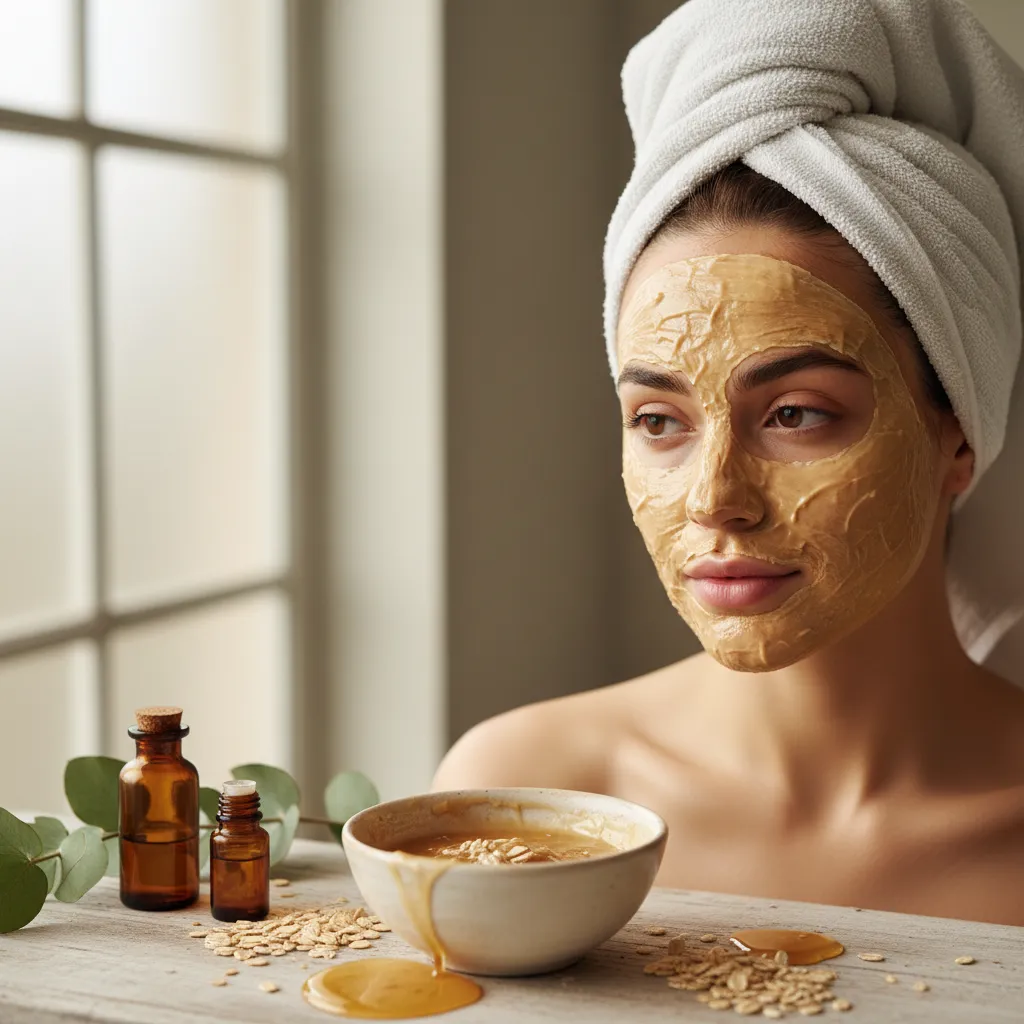
Ground oats (colloidal oats) — oats are naturally anti-inflammatory as well as mildly exfoliating, making them a good option for sensitive or reactive skin. Mix with honey or water into a paste, apply, and rinse.
Rice flour — finely ground rice flour is a traditional exfoliant used across East and Southeast Asian skincare traditions. It’s more neutral than sugar and slightly finer in texture, making it suitable for regular use.
What to avoid: walnut shell powder, baking soda, and coffee grounds are too coarse or too alkaline for facial skin. They can cause micro-tears in the skin or disrupt its natural pH.
Natural Chemical Exfoliants
Natural chemical exfoliants use mild acids to dissolve the bonds holding dead skin cells together — no scrubbing required. These are often gentler than physical methods for sensitive skin:
Yogurt — contains lactic acid, an alpha-hydroxy acid (AHA) that gently exfoliates and also has some moisturizing properties. Apply plain, unflavored yogurt as a mask for five to ten minutes, then rinse. The lactic acid concentration is low, making it suitable for beginners.
Honey — has mild enzymatic activity and is also antimicrobial and deeply moisturizing. Not as actively exfoliating as AHAs but useful as a gentle, hydrating option for sensitive skin.
Papaya — contains papain, a natural enzyme that breaks down dead skin proteins. Mashed ripe papaya applied for five to ten minutes acts as a mild enzyme exfoliant.
How Often to Exfoliate
Two to three times per week is sufficient for most skin types. Signs of over-exfoliation include persistent redness, tightness after washing, increased breakouts, or skin that feels more sensitive than usual. If you notice any of these, reduce frequency to once a week and allow the skin barrier to recover.
Women in perimenopause or menopause often find their skin becomes more sensitive — start with once per week and increase only if your skin tolerates it well.
What to Do After Exfoliating
Exfoliation temporarily makes skin more permeable — which means it absorbs what you apply next more readily. Always:
- Rinse with lukewarm (not hot) water
- Pat dry gently — no rubbing
- Apply a moisturizer or facial oil immediately while skin is still slightly damp
- Use SPF the next morning — freshly exfoliated skin is more susceptible to UV damage
Quick Recap
- Use fine sugar, ground oats, or yogurt — avoid walnut shell powder and baking soda
- Twice a week is ideal for most skin types; once a week for sensitive skin
- Moisturize immediately after, and use SPF the next day
Related Questions
Q: Can I exfoliate if I use retinol? A: Use caution — retinol already increases cell turnover, so adding physical exfoliation on the same days can over-sensitize skin. Exfoliate on non-retinol nights, or ask a dermatologist for guidance.
Q: Is exfoliating good for dry skin? A: Yes, but gently and less frequently. Dry skin often has a backlog of dead cells that prevent moisturizer from absorbing well. Once a week with a mild oat-based scrub, followed immediately by a rich moisturizer, works well. Mehr dazu →
Q: What does vitamin C serum do for skin? A: Vitamin C is an antioxidant that helps brighten skin, fade dark spots, and support collagen production. It pairs well with regular exfoliation. Mehr dazu →