skincare
Anti-Aging Skincare Tips for Women Over 40
Five ingredients that move the needle on skin aging after 40 — retinol, hyaluronic acid, daily SPF, eye area care, and why sleep beats any serum.
Read more →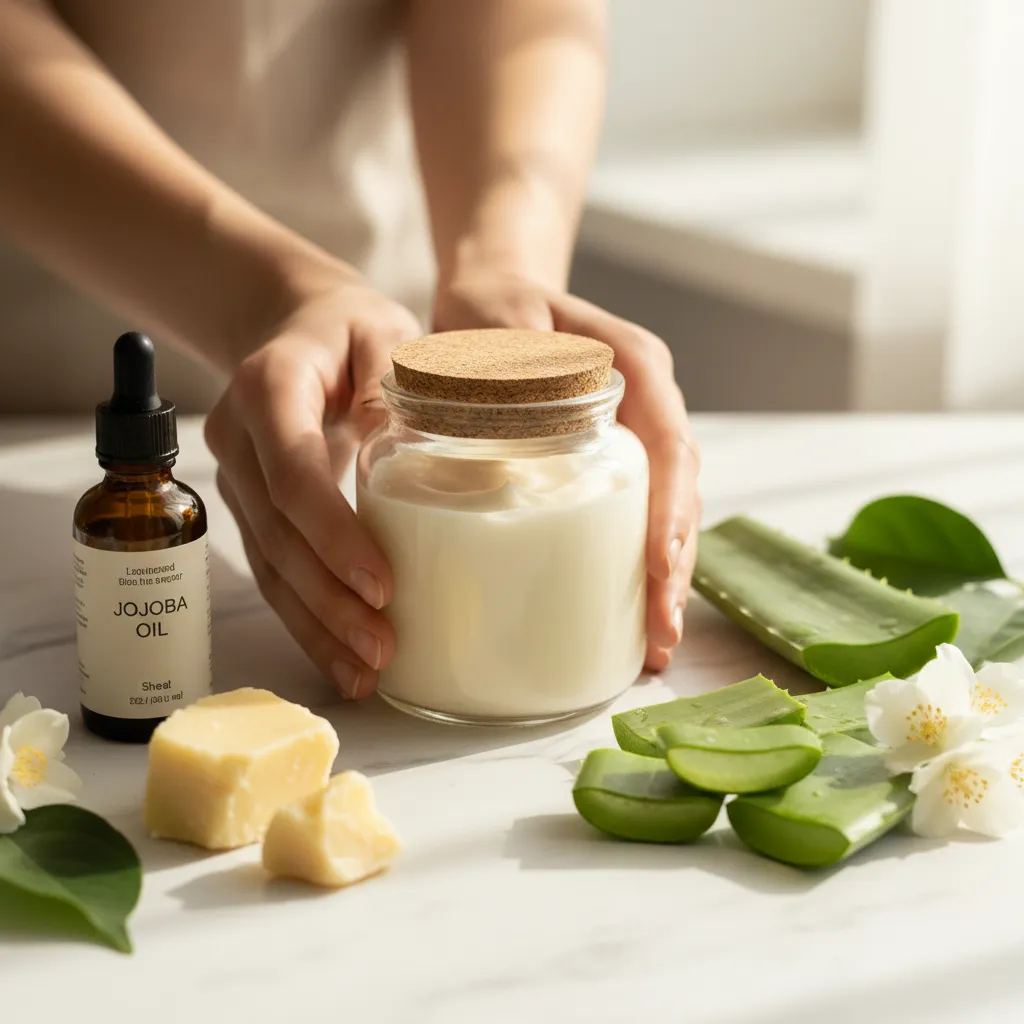
📋 Quick Summary
Dry skin isn’t just uncomfortable — it can make skin look dull, feel tight after washing, and become more reactive over time as the barrier weakens. The good news: some of the most effective moisturizing ingredients are natural, well-studied, and affordable.
This guide focuses on what the evidence actually supports. No filler ingredients, no inflated claims.
Before picking a moisturizer, it helps to understand what’s actually happening when skin gets dry. Dryness usually comes down to two problems: your skin isn’t holding onto enough water, or the barrier that normally prevents water loss has been compromised.
Moisturizers tackle this through three mechanisms — and the best ones use all three:
Humectants draw water into the skin. They pull moisture from the air or from deeper layers of the dermis up toward the surface. Hyaluronic acid, honey, and glycerin are the main examples.
Emollients fill in the microscopic cracks between dry, flaky skin cells, making skin feel smoother and softer. Most oils work as emollients — jojoba, sunflower, shea butter, and squalane all fall here.
Occlusives form a physical barrier on top of the skin to slow down water evaporation. Shea butter and cocoa butter have some occlusive properties at higher concentrations. Beeswax and lanolin are stronger natural occlusives.
Dry skin benefits most from products that combine all three. A hyaluronic acid serum followed by an oil or butter gives you humectant plus emollient in two steps. A well-formulated cream can deliver all three at once.
Shea butter comes from the fat extracted from the nuts of the Vitellaria paradoxa tree (shea tree), native to West Africa. It’s one of the most studied and widely used natural moisturizers — and for good reason. It works as both an emollient and a mild occlusive, which means it softens dry patches and helps lock moisture in.
It absorbs well for a butter, which makes it practical for both face and body. For very dry areas like elbows, knees, and heels, it’s one of the most effective options available. Raw, unrefined shea butter retains more of its natural vitamin E and anti-inflammatory compounds (particularly triterpenes) compared to refined white shea.
One practical note: unrefined shea has a mild nutty scent that some people love and others don’t. Refined shea is fragrance-neutral but has fewer of the beneficial compounds removed.
Jojoba (Simmondsia chinensis) is technically a liquid wax, not an oil — which is part of why it behaves differently from most plant oils. Its molecular structure closely resembles human sebum, meaning skin recognizes and absorbs it well.
It’s non-comedogenic, has a long shelf life (it doesn’t oxidize quickly like many other oils), and works well for most skin types including dry and sensitive. Studies have shown benefits for skin barrier repair, with anti-inflammatory properties that make it suitable for skin prone to irritation or eczema.
For dry skin, jojoba works best applied to slightly damp skin where it can lock in some moisture rather than just sitting on dry skin.
This one surprises people — sunflower oil is often overlooked compared to fancier options, but it’s one of the better-studied natural oils for dry skin.
The key is its fatty acid profile. Sunflower seed oil is high in linoleic acid (an omega-6 fatty acid), which supports the skin’s natural barrier structure. Research has shown that high-linoleic-acid oils help restore the barrier more effectively than high-oleic-acid oils — which is relevant because olive oil (commonly recommended for dry skin) is high in oleic acid and has been shown in studies to actually worsen barrier function with repeated use.
Sunflower oil is lighter than shea butter, absorbs relatively quickly, and works well mixed into DIY products or applied directly after bathing.
Hyaluronic acid (HA) is a naturally occurring molecule in the body — it’s found in skin, joints, and connective tissue — and it’s exceptionally good at holding onto water. One gram of hyaluronic acid can hold up to approximately 6 liters of water, which is why it’s become a cornerstone of hydration-focused skincare.
For dry skin, HA works best as a humectant layered under an emollient or occlusive. Applied alone to dry skin in low humidity, it can actually pull moisture out of deeper layers rather than from the air, which can make dryness worse. The fix: apply it to damp skin, then seal with an oil or cream while skin is still slightly moist.
Most HA in skincare is biotechnology-derived (fermented, not animal-sourced) and can reasonably be called natural depending on your definition.
Squalane is a stabilized form of squalene — a lipid your skin produces naturally, but produces less of as you age. This makes it particularly relevant for women over 35 whose skin is becoming drier not just from the environment but from internal hormonal changes.
It’s lightweight, absorbs quickly, doesn’t clog pores, and is stable (won’t oxidize like some plant oils). Modern squalane is typically derived from sugarcane or olive oil rather than the historical shark liver oil source — worth checking labels if that matters to you.
Because it’s so similar to the skin’s own lipids, it works well for sensitive, dry, or combination skin types. It’s effective used alone or layered under a richer moisturizer.
Colloidal oatmeal (very finely ground oats suspended in water) is one of the few natural ingredients with FDA-recognized status as a skin protectant. It contains beta-glucans that help strengthen the skin barrier, as well as avenanthramides with anti-inflammatory and anti-itch properties.
It’s particularly useful for dry skin that’s also sensitive or prone to conditions like eczema or contact dermatitis. It works well in DIY bath soaks and can be added to simple cream formulations.
Fragrance — both synthetic and natural. Essential oils and botanical fragrance extracts are among the most common causes of contact dermatitis. “Natural” fragrance is no less irritating than synthetic. Dry, compromised skin is especially vulnerable.
Alcohol (denatured) — often listed as SD alcohol, alcohol denat., or ethanol. It’s used in lightweight formulas to create a fast-drying finish, but it disrupts the skin barrier and strips moisture. Not the same as fatty alcohols like cetearyl alcohol, which are fine.
High-oleic oils on the face — olive oil, avocado oil, and high-oleic sunflower oil are emollients but can impair barrier function with regular use. Fine for occasional use or the body, but worth avoiding as a daily facial oil for dry or sensitive skin types.
Sulfate-heavy cleansers — sodium lauryl sulfate and similar surfactants strip natural oils. If your skin feels tight after washing, this is often why. Switching to a gentler cleanser is one of the fastest ways to improve dry skin without adding more products.
This recipe is simple, effective, and genuinely works for very dry skin. It’s best for body use and can be used on the face for dry or mature skin types, though those with acne-prone skin should test a small area first.
What you need:
Method:
The result is a light, whipped texture that absorbs better than plain shea butter while still providing good occlusive protection. The jojoba adds barrier-repair properties; sunflower adds linoleic acid for skin barrier support.
The order you apply products matters as much as what you use. For dry skin, the most effective approach:
In the morning, finish with SPF — sun exposure is one of the leading contributors to ongoing dryness and barrier damage.
If you’re building a longer-term natural skincare routine, moisturizing well is the foundation — but it works in context with the rest of what you’re doing. A good anti-aging routine pairs effective hydration with active ingredients that support skin renewal over time.
For a complete framework, the natural anti-aging skincare routine covers how moisture fits alongside vitamin C, retinol alternatives, and SPF into a cohesive daily practice.
And if you’re unsure which type of moisturizer — serum, lotion, cream, or oil — is the right format for your skin, how to choose the right moisturizer walks through the decision based on skin type, climate, and what you’re trying to fix.
FAQ: What Vitamins Are Good for Dry Skin?
skincare
Five ingredients that move the needle on skin aging after 40 — retinol, hyaluronic acid, daily SPF, eye area care, and why sleep beats any serum.
Read more →
skincare
Which face oils genuinely help mature skin — and which are just expensive bottles of empty hype. An honest, clear breakdown.
Read more →
skincare
Three DIY face masks from pantry ingredients — honey-oatmeal for soothing, avocado-olive oil for nourishing, cucumber-yogurt for brightening skin.
Read more →
Get access to my VIP newsletter with health tips, special deals, my free ebook on Seven Small Easy Habits and so much more!