TL;DR – Quick Summary
- Cold compress, aloe vera gel, and colloidal oatmeal are the three most effective evidence-backed options.
- Avoid toothpaste, undiluted essential oils, and alcohol on inflamed skin — they all make it worse.
- Green tea compresses reduce redness through topical antioxidant activity and are underused.
The Question
Skin inflammation — redness, puffiness, irritation, itching — can be caused by a product reaction, sun exposure, minor allergic response, an eczema flare, or simply touching your face too much. Most of the time it resolves on its own, but the right home remedy speeds that up significantly. Which remedies are actually backed by evidence, and which popular ones make things worse?
The Short Answer
A cold compress, pure aloe vera gel, and colloidal oatmeal are the three most reliably effective home treatments for skin inflammation — and they work through different mechanisms, so you can use them together. Green tea compresses are underrated and worth adding to the list.
The Full Answer
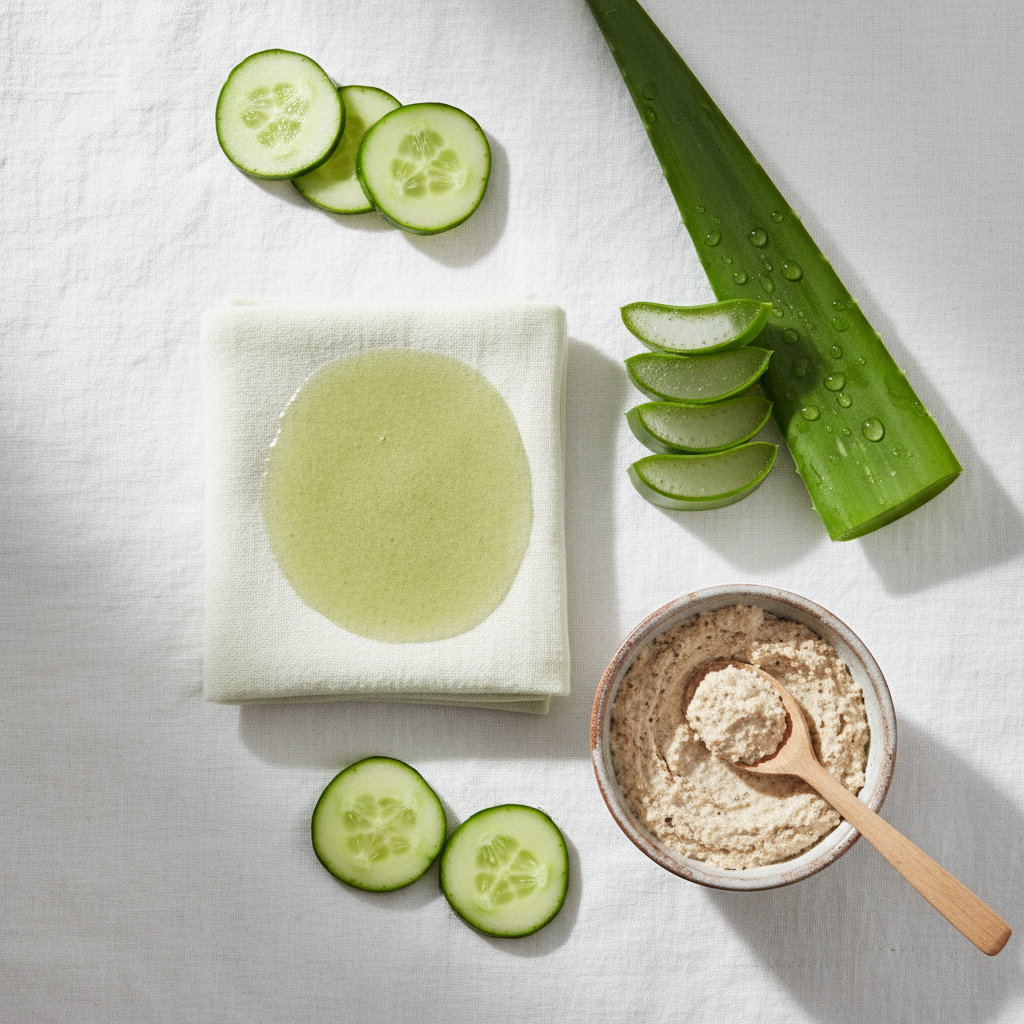
Cold compress — immediate relief: A clean cloth soaked in cold water, held against the skin for 5–10 minutes, reduces histamine-driven inflammation almost immediately. Cold constricts blood vessels and slows the cellular activity that causes redness and puffiness. For morning facial puffiness, wrap a few ice cubes in a thin cloth (never ice directly on skin) and hold lightly on the area for 3–5 minutes. Results are visible within minutes and last 1–2 hours.
Aloe vera gel — anti-inflammatory and cooling: Aloe vera’s effectiveness for skin inflammation is well-documented. The active compound acemannan has measurable anti-inflammatory and wound-healing properties. Fresh gel from the plant is more potent than commercial products, which often contain preservatives and added ingredients that can irritate sensitive skin. Cut a thick aloe leaf, scrape out the clear gel, and apply directly to the affected area for 15–20 minutes or overnight. Refrigerate unused gel for up to 5 days. If using commercial aloe, check for at least 98% pure aloe with no alcohol, artificial fragrance, or green dye — the natural gel is pale yellow or clear, not vivid green.
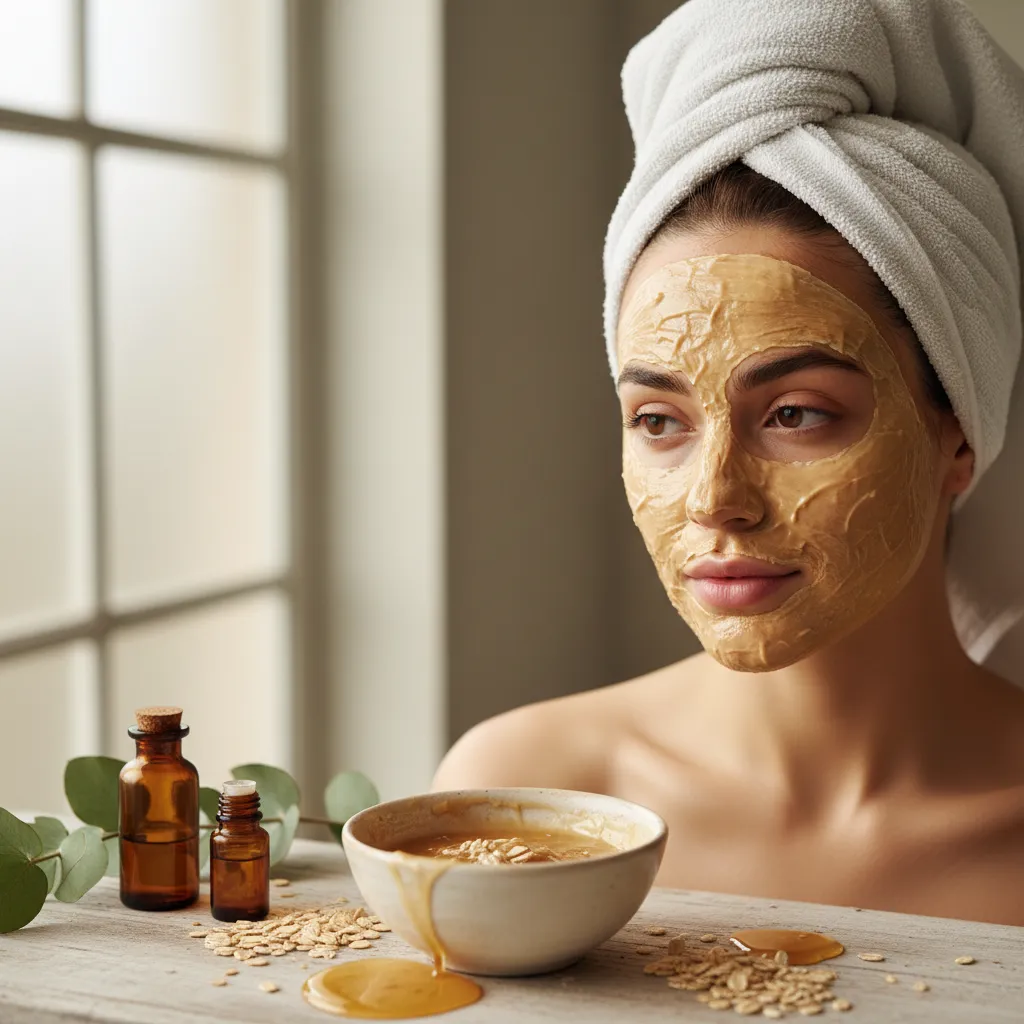
Colloidal oatmeal — best for widespread irritation: Colloidal oatmeal (finely ground oats) is the only OTC ingredient FDA-approved for eczema and skin irritation. Beta-glucans reduce inflammatory cytokine activity; avenanthramides are potent antioxidants that specifically calm itch. For widespread body irritation: add a cup of finely ground rolled oats to a lukewarm bath and soak 15–20 minutes. For facial irritation: mix colloidal oatmeal with warm water into a paste, apply, leave 10 minutes, rinse gently.
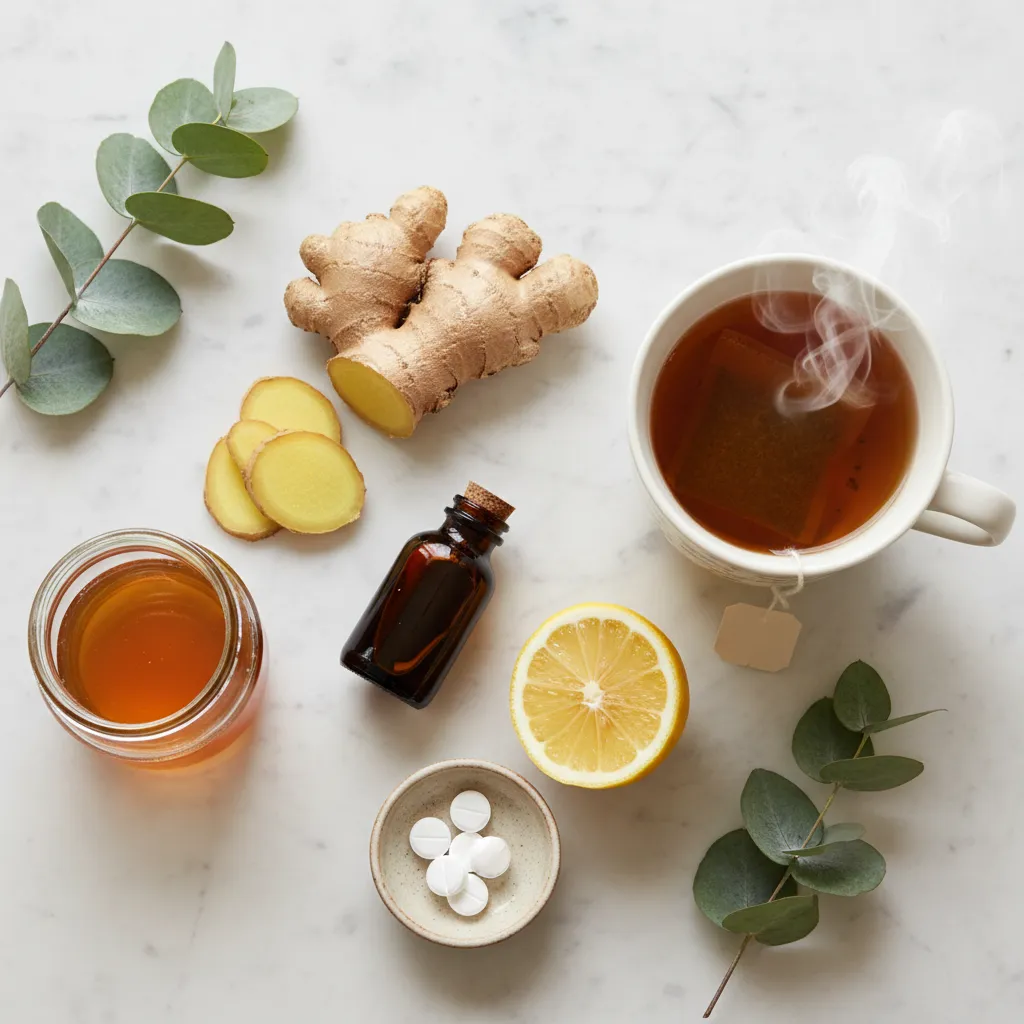
Green tea compress — underrated: Cooled green tea applied with a cotton pad or cloth is a genuinely effective anti-inflammatory treatment. EGCG in green tea reduces topical redness and inflammation. Brew a strong cup, let it cool completely, apply to skin for 10–15 minutes. Refrigerated in a glass container, it keeps for 2 days and works as a soothing toner between uses.
What to avoid: Toothpaste (fluoride, SLS, and menthol increase irritation), undiluted essential oils (even lavender causes contact dermatitis at full strength), alcohol-based toners (strip the barrier and worsen inflammation), and hot water (opens vessels and increases redness).
For inflammation that doesn’t resolve in 3–5 days, or that comes with fever, spreading redness, or streaking, see a doctor — those are signs of infection, not simple irritation.
Quick Recap
- Cold compress, aloe vera, and colloidal oatmeal are the three most effective evidence-backed home treatments
- Green tea compresses are underused and work well for redness and topical inflammation
- Avoid toothpaste, undiluted essential oils, alcohol toners, and hot water — all make inflammation worse