recipes
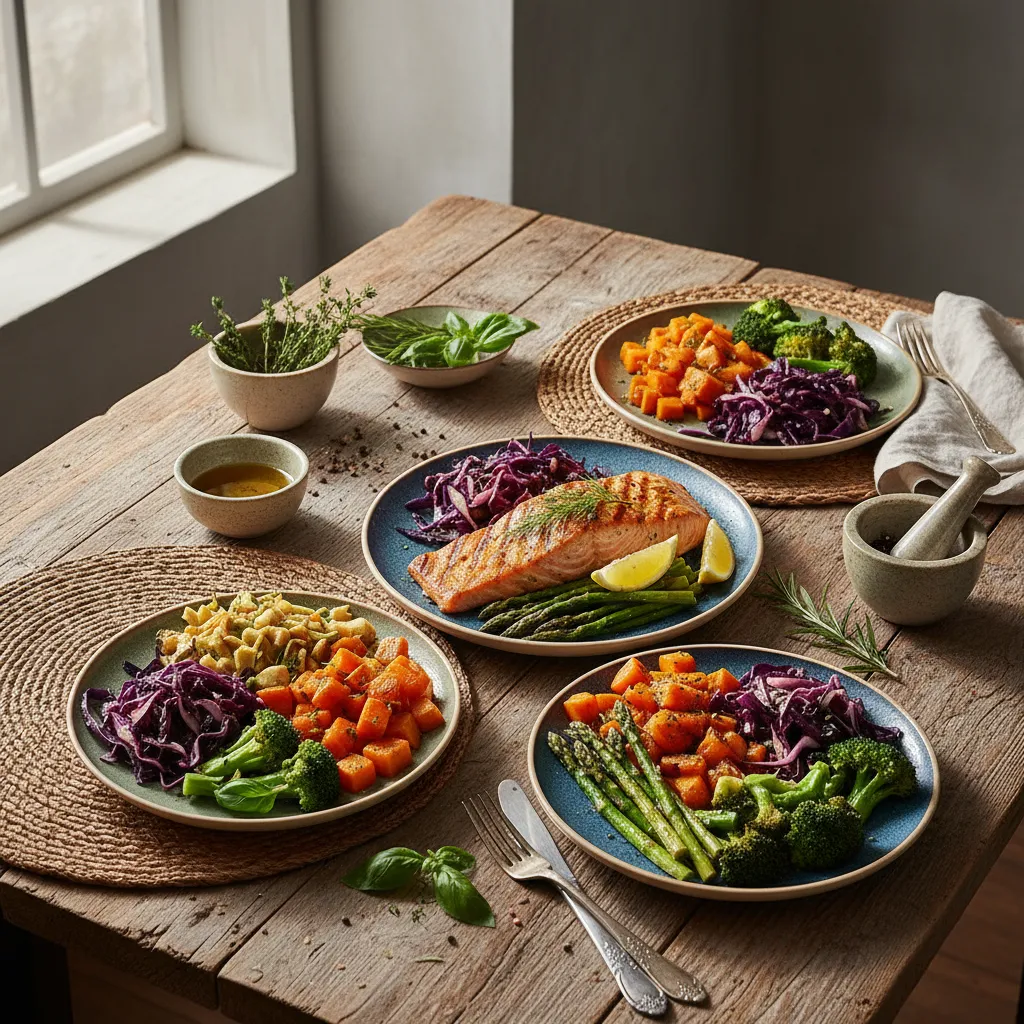
15-Minute Anti-Aging Dinner Ideas
Fast, delicious dinners that support healthy aging — made with ingredients you probably already have at home in your kitchen.
Read more →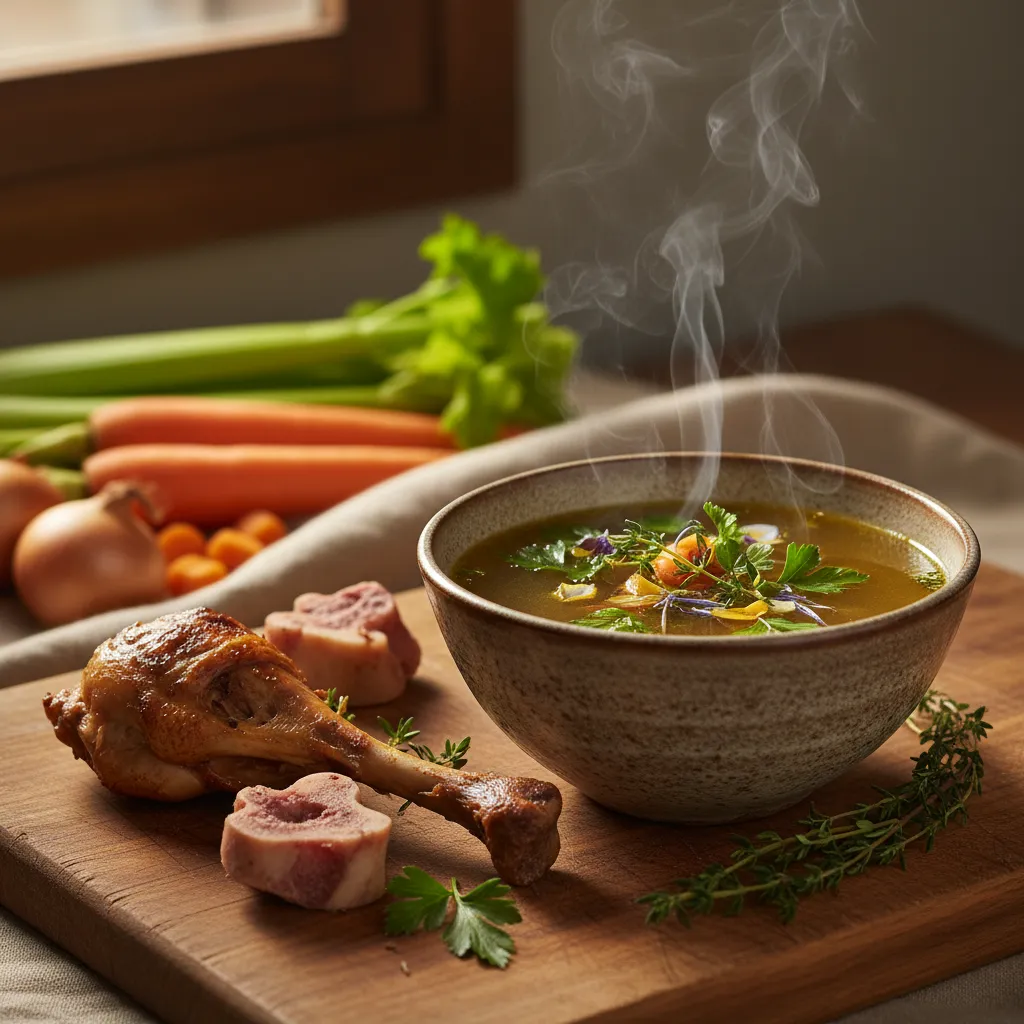
📋 Quick Summary
The benefits of bone broth for women have been discussed in wellness circles for years, but separating what’s actually backed by evidence from marketing claims can be difficult. Bone broth has been consumed in virtually every food culture for centuries — not as a trend, but because simmering bones is an efficient way to extract nutrients that would otherwise be discarded. The modern wellness version is often oversold, but the underlying nutritional benefits are real and particularly relevant for women over 40.
Here’s what bone broth actually contains, what that means for women’s health, and practical ways to use it.
Bone broth is made by simmering animal bones (and often connective tissue, cartilage, and marrow) in water for an extended period — typically 8–24 hours. During this process, several nutrients leach from the bones and connective tissue into the liquid:
Collagen/Gelatin: The prolonged cooking breaks down collagen in bones and connective tissue into gelatin — a partially hydrolyzed form of collagen. When chilled, quality bone broth will set like jelly due to its gelatin content. This gelatin provides glycine, proline, and hydroxyproline — the amino acids your body uses to synthesize collagen. Women over 40 see accelerated collagen loss as estrogen declines, making food-based collagen support especially timely.
Glycine: Beyond collagen support, glycine is an amino acid involved in sleep quality (it directly affects body temperature regulation during sleep), liver detoxification, and anti-inflammatory processes. Most people’s diets are relatively low in glycine because modern eating patterns don’t include much connective tissue.
Minerals: Calcium, magnesium, and phosphorus are present in bone broth, though quantities vary significantly based on the bones used and cooking method. Adding an acidic ingredient (like apple cider vinegar) to the cooking liquid helps extract more minerals from the bones.
Glucosamine and Chondroitin: These compounds, from cartilage, are sold as supplements for joint health. Bone broth made with joint-containing bones (chicken feet, knuckle bones) contains meaningful amounts.
The direct clinical evidence specifically on bone broth is limited — most research has been done on isolated components (collagen peptides, glycine, glucosamine) rather than broth itself. What’s reasonable to infer from the available research:
The claims that go beyond this — bone broth cures leaky gut, reverses arthritis, dramatically improves skin in weeks — exceed what the evidence supports. But for women managing the natural physiological changes that come with perimenopause and beyond, even modest, consistent support in the areas above has practical value.
For women over 40, three of bone broth’s main contributions are specifically timely:
Collagen production support: Skin collagen declines with age and accelerates with estrogen loss during perimenopause. Research suggests women can lose up to 30% of skin collagen in the first five years after menopause. Providing the amino acid building blocks for collagen synthesis through food is a low-cost, food-based approach to supporting skin and connective tissue health. This works best when combined with vitamin C-rich foods to enable collagen synthesis — see our guide on collagen-boosting foods for what pairs well.
Joint health: Joint stiffness and discomfort become more common in perimenopause, partly due to estrogen’s anti-inflammatory effects declining. Estrogen has a protective role in cartilage maintenance, and its reduction can accelerate joint wear. The glucosamine, chondroitin, and glycine in bone broth may offer modest support here — particularly when broth is made with knuckle bones and chicken feet, which are high in cartilage.
Sleep quality: Glycine before bed has been shown to improve sleep quality and reduce the time to fall asleep. Many women over 40 experience disrupted sleep due to hormonal fluctuations — night sweats, racing thoughts, and lighter sleep cycles are common. Sipping bone broth in the evening provides glycine in a food-based, warming form that doubles as a calming ritual.
Gut and hormone connection: The gelatin in quality bone broth may support intestinal lining integrity, which matters for nutrient absorption. Estrogen is partially metabolized through the gut via the estrobolome — the collection of gut bacteria that process estrogen metabolites. Gut health and hormone balance are closely connected, which makes gut-supportive foods like bone broth relevant for women navigating hormonal shifts.
The quality of your bone broth depends almost entirely on which bones you use and how long you simmer them.
Bones to use: For the most gelatin, use bones with high connective tissue content — chicken feet, chicken backs, beef knuckle bones, oxtail. Marrow bones add flavor and fat-soluble nutrients but don’t contribute gelatin on their own. A mix of joint bones and marrow bones produces the most nutritious broth.
Basic method:
When cold, the broth should have a gel-like consistency. Watery broth that doesn’t gel has less gelatin and therefore fewer collagen-building amino acids. This is the single most reliable quality indicator — no gel means minimal collagen benefit.
Slow cooker vs. stovetop: A slow cooker on low is the easiest method — you can leave it overnight without monitoring. Stovetop requires keeping the simmer very low to avoid excessive evaporation. Instant Pot at high pressure for 3–4 hours produces a reasonable result, though the broth is sometimes less clear than long-simmered versions.
As a warm drink: Heat a cup of bone broth and sip it in the evening instead of tea. Add a pinch of salt and herbs if desired. This is the simplest way to incorporate it consistently and takes advantage of the pre-sleep glycine benefit.
As a cooking base: Use instead of water or stock for cooking grains, braising vegetables, or as the base for soups. This method distributes the benefits across multiple meals without requiring you to drink broth directly.
In morning routines: Some women add a cup of bone broth to their morning routine, either alongside or instead of coffee. It provides a savory, warming start that’s high in protein-forming amino acids and low in caffeine.
Frozen in portions: Freeze in ice cube trays or half-cup portions. Pull out individual servings for soups, sauces, or quick drinks without making a full pot every time. This makes the habit much more sustainable week-to-week.
Quality store-bought bone broth exists but requires careful label reading. Look for broth that gels when refrigerated — this indicates sufficient gelatin content. Products labeled “bone broth” that remain watery when cold are effectively just stock, regardless of what the packaging claims.
What to look for on labels:
Homemade is generally superior in gelatin content and considerably cheaper per serving. The hands-off nature of the long simmer (particularly in a slow cooker or instant pot) makes the effort relatively low once you have a system for it.
If making homemade bone broth isn’t practical every week, these store-bought options meet the quality standard of gelling when refrigerated:
For making homemade broth, a large slow cooker (6–8 quart) is the most practical tool. View slow cookers on Amazon
The benefits of bone broth for women are real, but they’re modest and cumulative — this is a nutritional support tool, not a cure. Where it earns a consistent place in a routine is through daily or near-daily use, particularly as an evening drink for sleep support, and as a cooking base that adds gelatin and minerals to meals you’re already making.
For women in perimenopause or post-menopause, the combination of collagen amino acids, joint-supportive compounds, and sleep-promoting glycine makes bone broth one of the more practical food-based additions to support the body’s changing needs. The key is quality — a broth that gels when cold is doing the work; one that stays liquid is mostly just warm water with salt.
→ Explore more in our Recipes Hub.
recipes
Fast, delicious dinners that support healthy aging — made with ingredients you probably already have at home in your kitchen.
Read more →
recipes
Fight inflammation naturally with these easy anti-inflammatory recipes. Meal ideas for breakfast, lunch and dinner. Perfect for busy moms.
Read more →
recipes
Add these 10 powerful anti-inflammatory foods to your daily diet. Science-backed choices easy to find at any grocery store — for women over 40.
Read more →
Get access to my VIP newsletter with health tips, special deals, my free ebook on Seven Small Easy Habits and so much more!