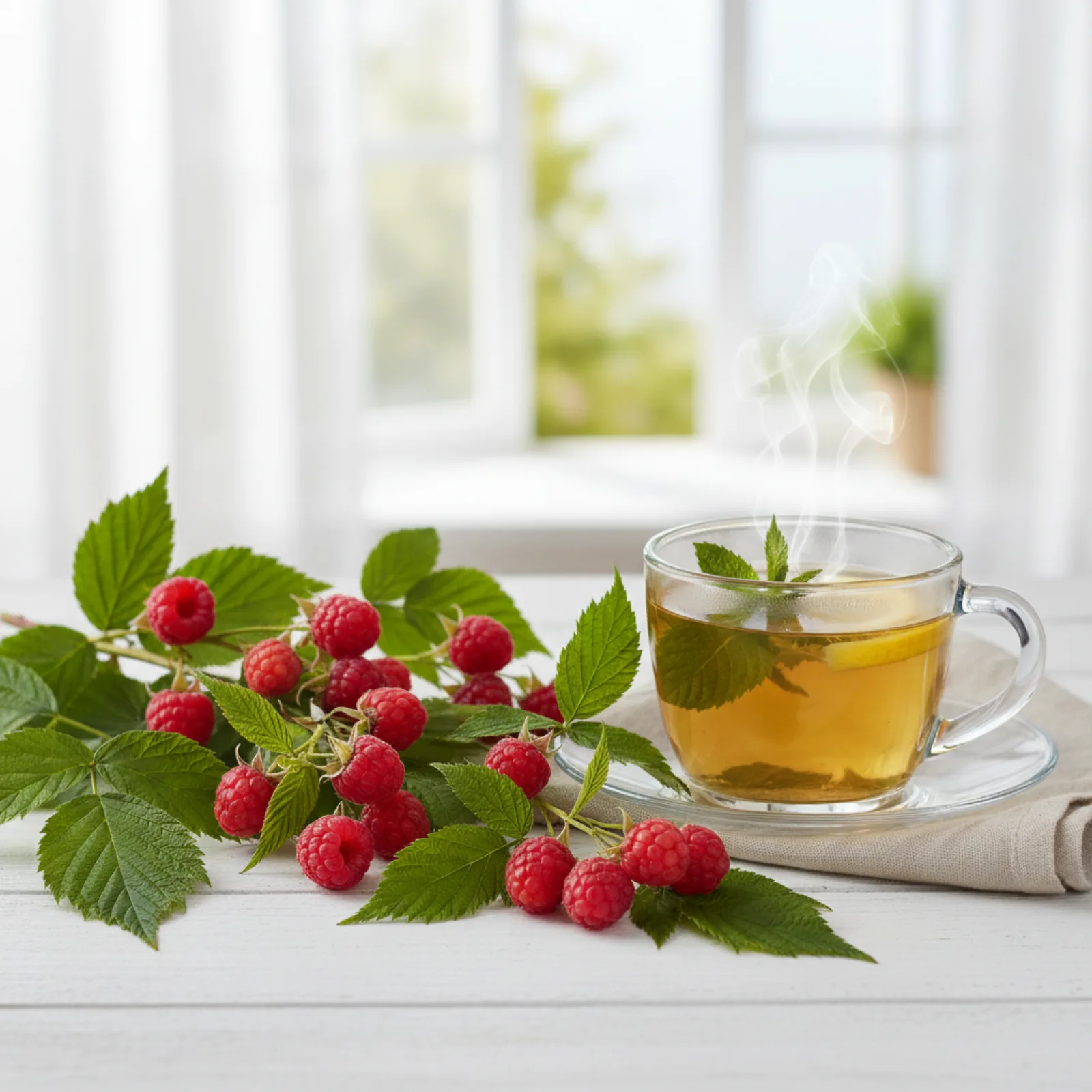
Raspberry Leaf Tea Benefits: What Every Woman Should Know
For centuries, women have turned to the earth for healing, and few botanical allies are as revered as the red raspberry leaf. While most of us associate raspberries with sweet summer berries, the leaves of the Rubus idaeus plant hold a potent concentration of vitamins and minerals specifically tailored to the female reproductive system.
Whether you are navigating the turbulence of your monthly cycle, preparing for the arrival of a baby, or simply looking for a caffeine-free way to support your endocrine health, understanding raspberry leaf tea benefits can be a game-changer for your wellness routine.
What Is Raspberry Leaf Tea?
Unlike the fruit, which is prized for its antioxidants and sweetness, the leaves of the red raspberry plant are used as an herbal infusion. This is not a fruit-flavored tea — it is a true tisane made from the dried foliage of Rubus idaeus.
The tea is rich in tannins and flavonoids. Its most distinctive characteristic is the presence of fragarine, a phytochemical that acts on smooth muscle tissue of the uterus. By gently toning the uterine walls, fragarine helps the muscle function more efficiently — which is why raspberry leaf has become a staple in holistic midwifery and women’s health traditions worldwide (Quelle: NCCIH – Herbal Supplements).
From a nutritional standpoint, raspberry leaf is a powerhouse. It provides:
- Iron — essential for oxygen transport and energy levels
- Magnesium — crucial for muscle relaxation and nerve function
- Calcium — vital for bone health and cellular communication
- Potassium — supports fluid balance and heart health
- Vitamins B, C, and E — antioxidant and immune support
Top Raspberry Leaf Tea Benefits for Women
1. Hormone Balance and PMS Relief
For many women, the monthly cycle is accompanied by cramping, bloating, and mood swings. Magnesium — found in high concentrations in raspberry leaf — plays a key role in regulating the HPA (hypothalamic-pituitary-adrenal) axis, which governs the stress response and hormonal output (Quelle: NCBI/PubMed, Barbagallo & Dominguez 2010).
Low magnesium levels are directly linked to PMS severity. A 2017 systematic review found that magnesium supplementation significantly reduced PMS symptoms including irritability, anxiety, and bloating (Quelle: PubMed, Fathizadeh et al.). Raspberry leaf tea provides a gentle, food-based source of magnesium to support this balance.
2. Menstrual Cramp Relief (Dysmenorrhea)
The primary raspberry leaf tea benefit during menstruation is its antispasmodic effect. The fragarine alkaloid helps tone the uterine muscle, which can reduce the intensity of uterine contractions that cause cramping. A well-toned uterus contracts more efficiently, often leading to a shorter, less painful period.
Dysmenorrhea affects up to 84% of women of reproductive age, and up to 25% report it severe enough to interfere with daily activities (Quelle: Healthline / NCBI). While raspberry leaf tea is not a pharmaceutical analgesic, its antispasmodic properties make it a popular complementary option among women seeking natural relief.
3. Pregnancy Support and Labor Preparation
Perhaps the most famous use of raspberry leaf tea is during the third trimester of pregnancy. It is often called a “uterine tonic,” but it’s important to understand when and how to use it.
Toning the uterus for labor: The goal in late pregnancy is not to induce labor, but to condition the uterine muscle. Think of it as a gentle workout for uterine tissue — by strengthening muscle fibers, the tea may help the uterus contract more effectively once true labor begins.
A 1999 Australian study involving 108 women found that those who consumed raspberry leaf tablets from 32 weeks gestation had a shorter second stage of labor (mean: 9.59 minutes vs. 14.98 minutes for the control group) and lower rates of forceps delivery (Quelle: PubMed, Simpson et al. 1999).
Postpartum recovery: After birth, raspberry leaf tea supports uterine involution — the process by which the uterus returns to its pre-pregnancy size. This can help reduce excessive postpartum bleeding and support overall recovery.
Safety note: Avoid raspberry leaf tea during the first and second trimesters. Its uterine-stimulating properties could theoretically interfere with early pregnancy stability. Always consult your OB-GYN or midwife before use (Quelle: WebMD – Vitamins & Supplements).
4. Antioxidant and Anti-Inflammatory Support
Raspberry leaves are rich in ellagitannins, quercetin, and kaempferol — flavonoids with potent antioxidant and anti-inflammatory properties (Quelle: PubMed, Gudej & Tomczyk 2004). These compounds help neutralize free radicals and reduce systemic inflammation, which underlies many chronic health conditions affecting women, including cardiovascular disease and autoimmune disorders.
For health-conscious women looking to reduce their body’s oxidative burden, switching from sugary beverages to a daily cup of raspberry leaf tea is a simple, effective dietary shift. For more holistic wellness strategies, explore our Health & Supplements Hub.
5. Digestive Health
The tannins in raspberry leaf tea have mild astringent properties that can help calm an irritated digestive tract. Tannins act by precipitating proteins in the gut lining, which can reduce intestinal inflammation and mild diarrhea (Quelle: Medical News Today).
Additionally, the tea acts as a mild diuretic, helping the body flush excess sodium and reduce water retention — a common complaint during the luteal phase of the menstrual cycle and during pregnancy (Quelle: Medical News Today – Herbal Teas).
6. Fertility Support
While direct clinical trials on raspberry leaf and fertility are limited, the tea’s mineral profile — particularly its iron and folate content — supports a healthy reproductive environment. Iron-deficiency anemia is one of the most common nutritional deficiencies in women of reproductive age, affecting approximately 30% globally (Quelle: WHO, 2021). Maintaining adequate iron intake supports ovulatory function and endometrial health.
How to Make Raspberry Leaf Tea
To get the most out of raspberry leaf tea benefits, preparation matters. A quick tea bag dip often isn’t enough to extract the potent minerals and fragarine.
The Strong Brew Method (Recommended for Therapeutic Use)
- Use 1–2 tablespoons of dried raspberry leaf per 8 oz of boiling water
- Cover the cup or pot — this keeps volatile compounds from escaping with the steam
- Steep for 15–20 minutes minimum. For a medicinal tonic strength, steep overnight in a thermos (cold infusion)
Flavor Pairings
Raspberry leaf tea has a mild, earthy, slightly grassy taste — similar to light black tea without the bitterness. To enhance flavor naturally:
- Fresh lemon — adds vitamin C and brightens earthy notes
- Raw honey — a touch of sweetness with soothing properties
- Fresh ginger — warming, anti-nausea (especially helpful in late pregnancy)
- Nettle leaf — pairs perfectly and adds additional iron content
Choosing Quality Leaf
Look for certified organic, loose-leaf raspberry leaves to avoid pesticide exposure. Ensure the product contains 100% pure raspberry leaf without added natural flavors or fillers. A high-quality option: Traditional Medicinals Organic Raspberry Leaf Tea on Amazon.
How Much Raspberry Leaf Tea Should You Drink?
Dosage recommendations vary by purpose:
- General wellness: 1–2 cups per day
- PMS/menstrual support: Begin 1–2 weeks before your expected period, 2 cups daily
- Pregnancy preparation (third trimester only): Start at 1 cup/day at 32 weeks, increasing to 2–3 cups/day by 36 weeks — always under midwife or OB supervision
Do not exceed 3–4 cups per day regardless of purpose.
Side Effects and Precautions
Raspberry leaf tea is generally well-tolerated, but the following precautions apply:
- Early pregnancy (trimesters 1–2): Avoid unless cleared by your provider — the uterine-stimulating effect is a contraindication in early gestation
- Blood thinners (Warfarin): The tea’s vitamin K content can interfere with anticoagulant medications — consult your doctor
- Severe uterine conditions: Women with a history of unstable pregnancy, placenta previa, or uterine fibroids should seek professional guidance first
- Rubus allergy: If you are allergic to raspberries, blackberries, or other members of the Rubus genus, avoid this tea
- Laxative effect: Very high doses can have a mild laxative effect in sensitive individuals
Frequently Asked Questions
Can raspberry leaf tea induce labor? No — the tea is a uterine tonic, not a labor inducer. It conditions the uterine muscle for more efficient contractions but does not chemically trigger labor onset.
When should I start drinking it during pregnancy? Most midwives recommend starting at 32–34 weeks, beginning with 1 cup per day and gradually increasing. Never use it in the first or second trimester without medical clearance.
Does it taste like raspberries? No. Raspberry leaf tea tastes earthy and mildly grassy, similar to a light black tea — not fruity. The flavor comes from the leaf, not the berry.
Can I drink it while breastfeeding? Limited safety data exists. Many practitioners consider it safe in moderate amounts postpartum, but consult your healthcare provider to be sure.
Is it safe for teenagers? For teens experiencing painful periods, raspberry leaf tea is generally considered safe. However, consulting a healthcare provider before use is always advisable for minors.
Conclusion
Raspberry leaf tea is more than a beverage — it is a traditional herbal ally with a growing body of evidence supporting its role in women’s health. From easing menstrual cramps and balancing hormones to preparing the uterus for labor and supporting postpartum recovery, the benefits are genuine and meaningful.
As with any herbal remedy, quality matters. Choose organic, pure leaf products, brew it properly for full extraction, and use it with appropriate timing based on your health goals. For women seeking natural, evidence-based additions to their wellness toolkit, raspberry leaf tea deserves a permanent spot in the pantry.
For more herbal wellness strategies tailored to women over 25, visit our Health & Supplements Hub.
Sources
- National Center for Complementary and Integrative Health (NCCIH): https://www.nccih.nih.gov/
- Simpson M et al. (1999). Raspberry leaf in pregnancy: Its safety and efficacy in labor. Journal of Midwifery & Women’s Health. https://pubmed.ncbi.nlm.nih.gov/10754818/
- Barbagallo M, Dominguez LJ (2010). Magnesium and aging. Current Pharmaceutical Design. https://pubmed.ncbi.nlm.nih.gov/20388094/
- Fathizadeh N et al. (2010). Evaluating the effect of magnesium and magnesium plus vitamin B6 supplement on the severity of premenstrual syndrome. https://pubmed.ncbi.nlm.nih.gov/20454892/
- Gudej J, Tomczyk M (2004). Determination of flavonoids, tannins and ellagic acid in leaves from Rubus species. Archives of Pharmacal Research. https://pubmed.ncbi.nlm.nih.gov/15354322/
- Dysmenorrhea prevalence: https://www.ncbi.nlm.nih.gov/pmc/articles/PMC4834015/
- Medical News Today – Herbal Teas: https://www.medicalnewstoday.com/
- WebMD – Vitamins & Supplements: https://www.webmd.com/vitamins/
- WHO – Anaemia (2021): https://www.who.int/news-room/fact-sheets/detail/anaemia