TL;DR – Quick Summary
- Flavanols in dark chocolate and berries may activate the brain through taste, not just absorption.
- Mouse study shows brain responses similar to mild exercise after flavanol intake.
- Human trials are still needed, but flavanol-rich foods already show consistent brain health benefits.
New research suggests flavanols in dark chocolate may stimulate the brain through taste alone—here's what the science says and which foods to add.
Source: MindBodyGreen →
If you’ve been reaching for dark chocolate and telling yourself it’s good for your brain, new research from Japan gives you even more reason to feel justified. A preclinical study suggests that flavanols—the antioxidant compounds found in dark chocolate, berries, and green tea—may stimulate brain activity through a mechanism that goes beyond simple nutrient absorption.
The “Sensory Nutrition” Discovery
Researchers at the Shibaura Institute of Technology in Japan set out to answer a puzzling question: if flavanols are poorly absorbed into the bloodstream, why do they consistently show up in brain health research as beneficial? Their study, published in Current Research in Food Science, points to a surprising answer—the taste itself may be the trigger.
The astringent sensation that flavanols create in your mouth appears to send signals directly to the brain via sensory nerves. The researchers call this “sensory nutrition,” a concept suggesting that certain foods activate neurological pathways before they’re even fully digested.
What Happened in the Study
In mice given flavanol doses, the research team observed a cluster of notable effects: increased physical activity and exploration, improved learning and memory performance, and activation of the locus coeruleus-noradrenaline system—the brain’s alertness center. Dopamine and norepinephrine levels also rose. In short, the mice’s brains responded as though they had experienced mild exercise.
The findings offer a potential explanation for why flavanol-rich foods appear so regularly in cognitive health research even when direct absorption into the brain is limited.
What Flavanols Are and Where to Find Them
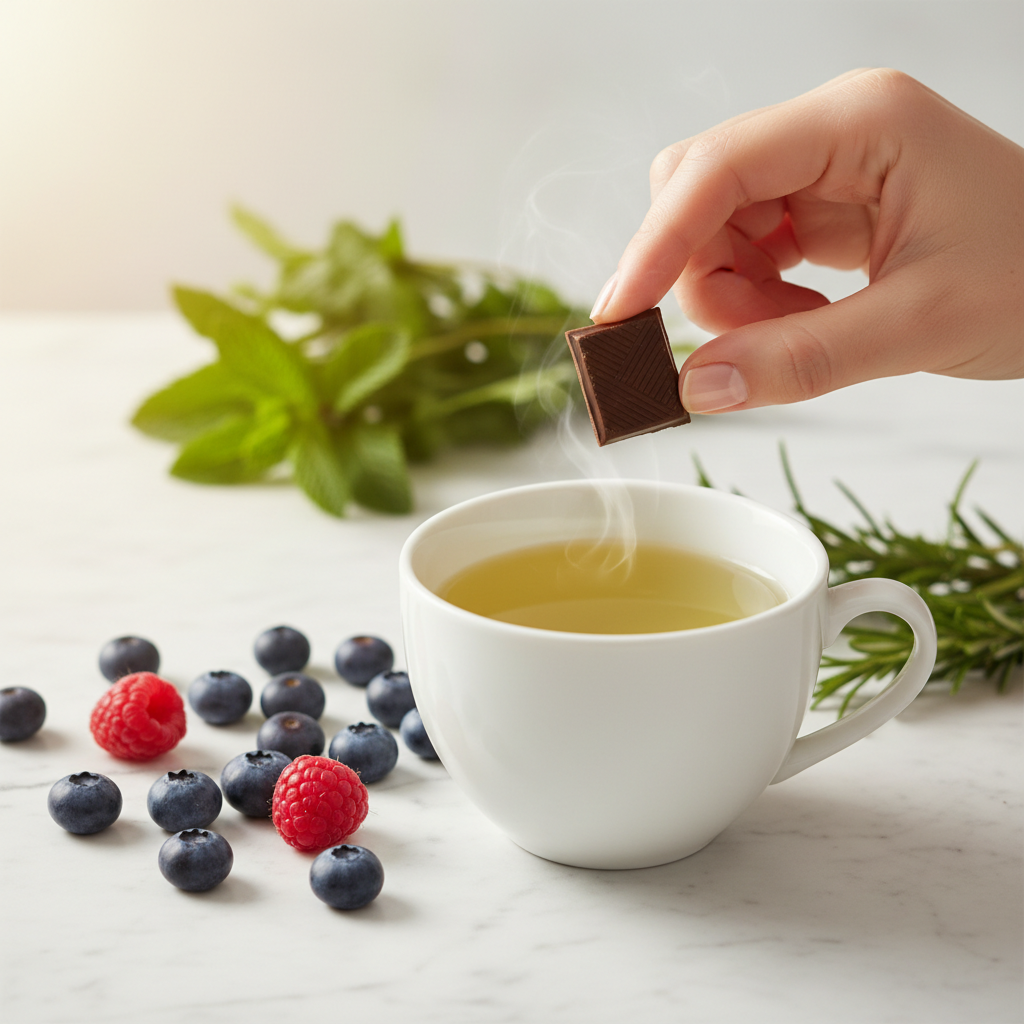
Flavanols are a subtype of polyphenols, plant-based micronutrients with antioxidant and anti-inflammatory properties. The richest food sources include dark chocolate (70% cacao or higher), green and black tea, fresh apples, blueberries, blackberries, and red wine in moderation. These aren’t exotic superfoods—they’re already staples in a wellness-oriented kitchen.
The Important Caveat
This research was conducted in mice, not humans. Controlled doses in animal studies don’t translate directly to human dietary equivalents, and the researchers are clear that human clinical trials are needed before this mechanism can be confirmed in people. The sensory nutrition concept is promising and biologically plausible, but it remains early-stage science.
Why This Matters for Your Daily Routine
Previous human research already links higher flavanol intake to better cognitive performance, healthier brain aging, and improved cardiovascular function. For women navigating the mental demands of busy lives—managing work, family, and self-care simultaneously—finding brain-supportive foods that are genuinely enjoyable to eat is a meaningful benefit. A square of quality dark chocolate with your afternoon tea isn’t just a treat; it may be actively supporting your focus and mental clarity.