TL;DR – Quick Summary
- Selenium, magnesium, folate, and fiber were linked to 23–45% lower odds of depression in a 5,068-person study.
- Folate showed the strongest association — up to 45% lower depression odds.
- All four nutrients come from whole foods: dark greens, legumes, seeds, nuts, and whole grains.
NHANES data from 5,000+ U.S. adults links fiber, folate, magnesium, and selenium to 23–45% lower odds of depression.
Source: MindBodyGreen →
If you’ve noticed that eating well tends to lift your mood, research is now putting specific numbers to that connection. A new study examining data from more than 5,000 U.S. adults found four nutrients that consistently appeared in people with significantly lower rates of depression — and all four are available through everyday whole foods.
How the Study Worked
Researchers analyzed 2017–2018 National Health and Nutrition Examination Survey (NHANES) data from 5,068 U.S. adults, as reported by MindBodyGreen. Participants completed depression screening assessments and provided dietary recalls, and the researchers adjusted for age, sex, BMI, smoking status, and energy intake to isolate nutrient-specific associations.
The Four Nutrients — and Why They Work
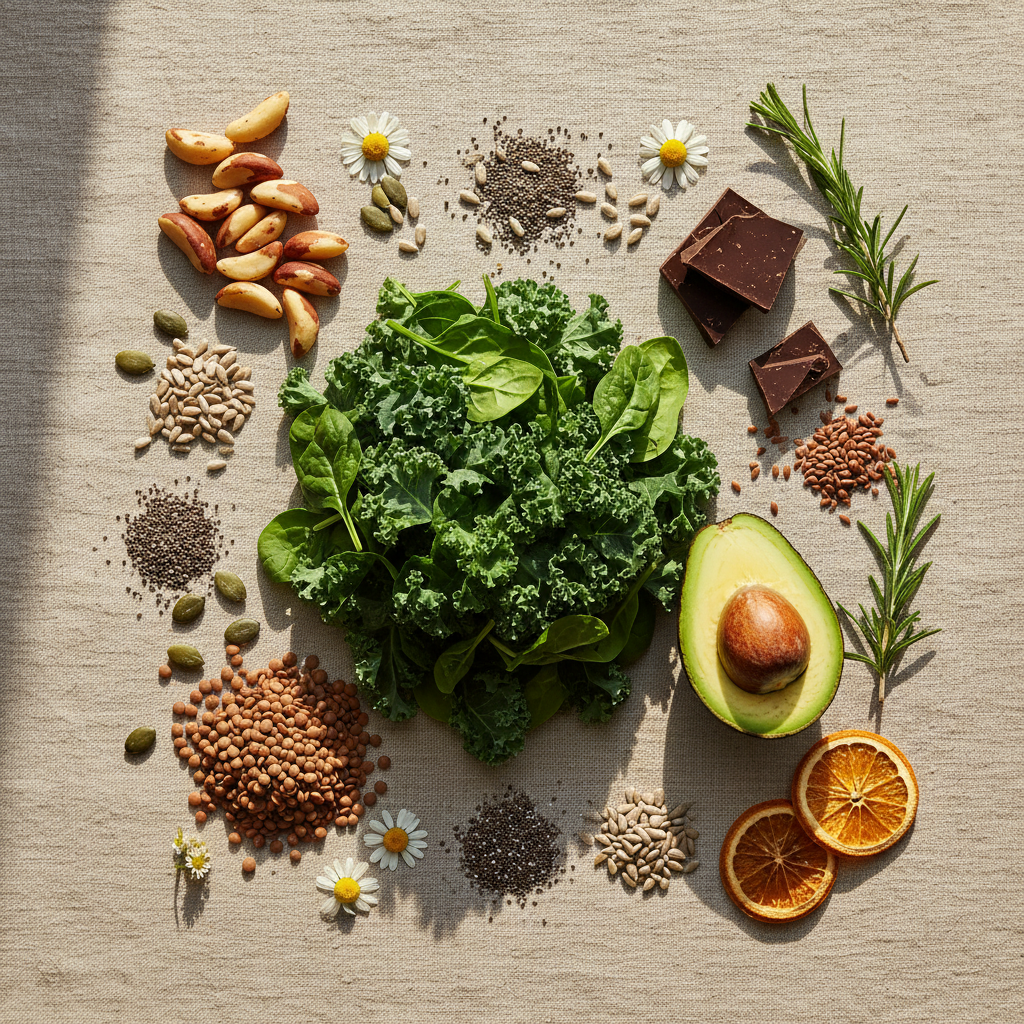
Selenium was linked to 40% lower odds of depression. It works by neutralizing oxidative stress and supporting thyroid function, both of which play a role in mood regulation. Food sources include Brazil nuts (just one or two per day covers your daily needs), tuna, sardines, eggs, and sunflower seeds.
Magnesium was associated with 38% lower odds of depression. It regulates NMDA receptors — stress-response receptors that, when chronically overactive, contribute to depressive symptoms. Good sources include seeds, nuts, dark chocolate, beans, and whole grains.
Folate showed the strongest association in the study, with 28–45% lower odds of depression. It supports one-carbon metabolism, which enables the body to produce serotonin, dopamine, and norepinephrine — the primary neurotransmitters involved in mood. Asparagus, dark leafy greens, avocado, and lentils are among the richest sources.
Fiber was linked to 23–36% lower odds of depression. The mechanism runs through the gut-brain axis: fermented dietary fiber produces short-chain fatty acids that reduce brain inflammation and support the microbiome’s role in mood regulation. Load up with legumes, vegetables, fruits, and whole grains.
What This Means for Your Plate
These are not exotic supplements — they are foods most Glowing Mamas readers already cook with. A lunch of lentil soup with dark leafy greens, a handful of sunflower seeds, and a piece of dark chocolate covers several of these bases in a single meal. The research does not promise that eating well will eliminate depression, but the data is consistent: people who regularly consume these nutrients show meaningfully lower rates.
Source: MindBodyGreen