TL;DR – Quick Summary
- An estimated 90% of adults have insufficient magnesium intake in their daily diet
- Low magnesium levels are linked to heightened anxiety and nervous system dysregulation
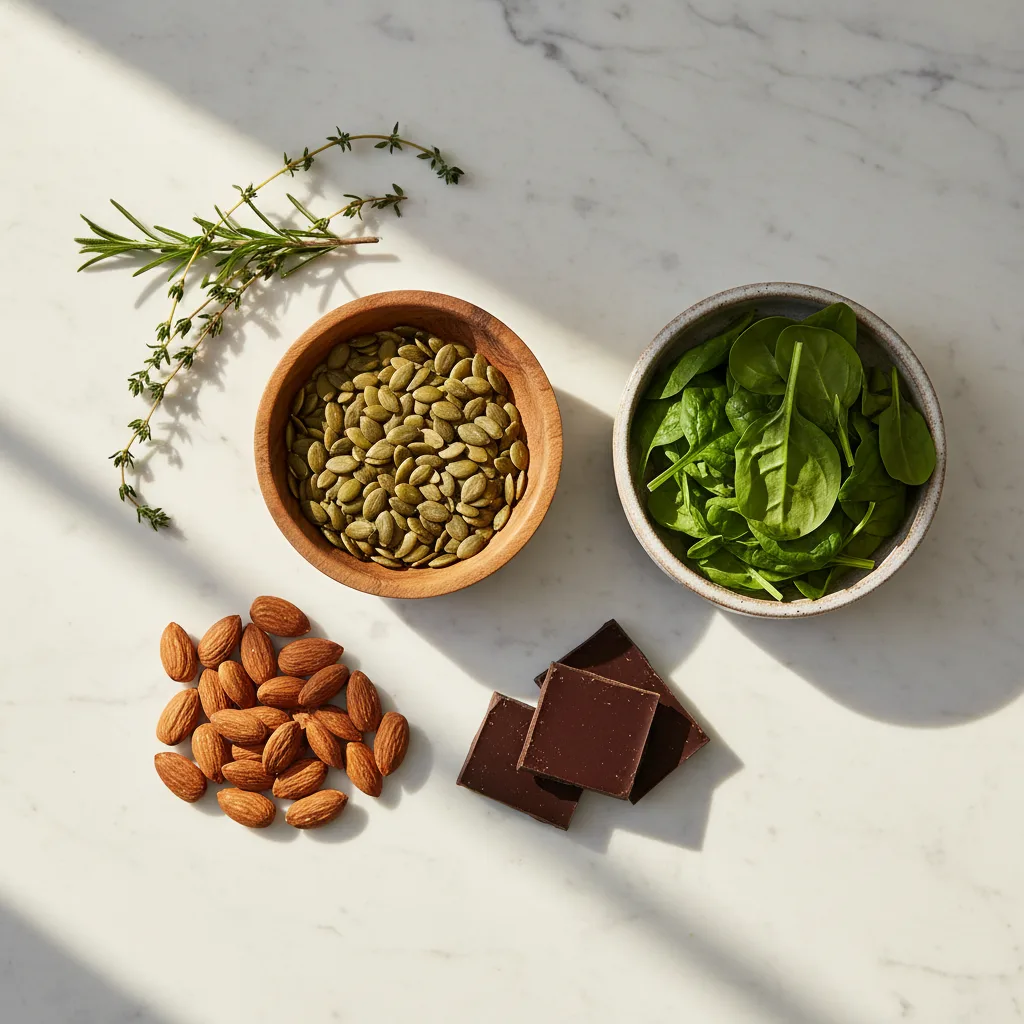
- Leafy greens, pumpkin seeds, and dark chocolate are rich natural sources of magnesium
Magnesium deficiency (~90% of adults) may amplify anxiety. Restoring it through food or gentle supplements helps women manage stress and hormonal sleep issues.
Anxiety isn't always just in your head. Sometimes it's in your plate — and the nutrient most of us are missing may be quietly amplifying it.
Source: MindBodyGreen →
When anxiety shows up unexpectedly — a tight chest during an ordinary workday, restless sleep despite a calm evening — most of us reach for stress-management tools first: breathwork, meditation, a walk outside. New reporting suggests that for a significant portion of women, the problem may start earlier in the chain. A nutrient deficiency that affects an estimated 90% of adults may be quietly shaping how reactive the nervous system feels from moment to moment.
The Link Between Magnesium and Mood
Magnesium is one of the busiest minerals in the body, involved in over 300 enzymatic reactions — including the regulation of the nervous system and the body’s stress response. When magnesium levels are low, the nervous system tends to sit in a more activated state. This can translate into heightened anxiety, racing thoughts, muscle tension, and difficulty winding down at night. Emerging research is beginning to treat low magnesium not as a footnote but as a potential driver of anxiety symptoms in otherwise healthy adults.
Why So Many Women Are Short
Modern agricultural practices have gradually depleted magnesium in soil, which means even a diet rich in whole foods may deliver less of the mineral than it did a generation ago. Stress itself accelerates magnesium loss — the body excretes it more rapidly under chronic activation — creating a feedback loop where stressed women become progressively more deficient over time. Coffee, alcohol, and hormonal birth control can all compound the drain.
Food-First Sources to Prioritize
The simplest place to start is on the plate. Dark leafy greens (spinach, Swiss chard, kale), pumpkin seeds, almonds, black beans, avocado, and good-quality dark chocolate are all concentrated natural sources. Building two to three magnesium-rich foods into the daily rotation tends to be more effective than relying on supplementation alone, and there’s no risk of overshooting.
When to Consider a Supplement
For women with persistent anxiety, poor sleep, or muscle cramping, a gentle supplemental form — such as magnesium glycinate or magnesium citrate — taken in the evening may be worth exploring. Glycinate in particular has a calming profile and is less likely to cause digestive upset than magnesium oxide. As always, a quick check-in with a clinician is wise before adding any supplement, particularly if kidney function or medications are involved.
For many Glowing Mamas readers, this is a low-risk, high-yield place to start a reset.