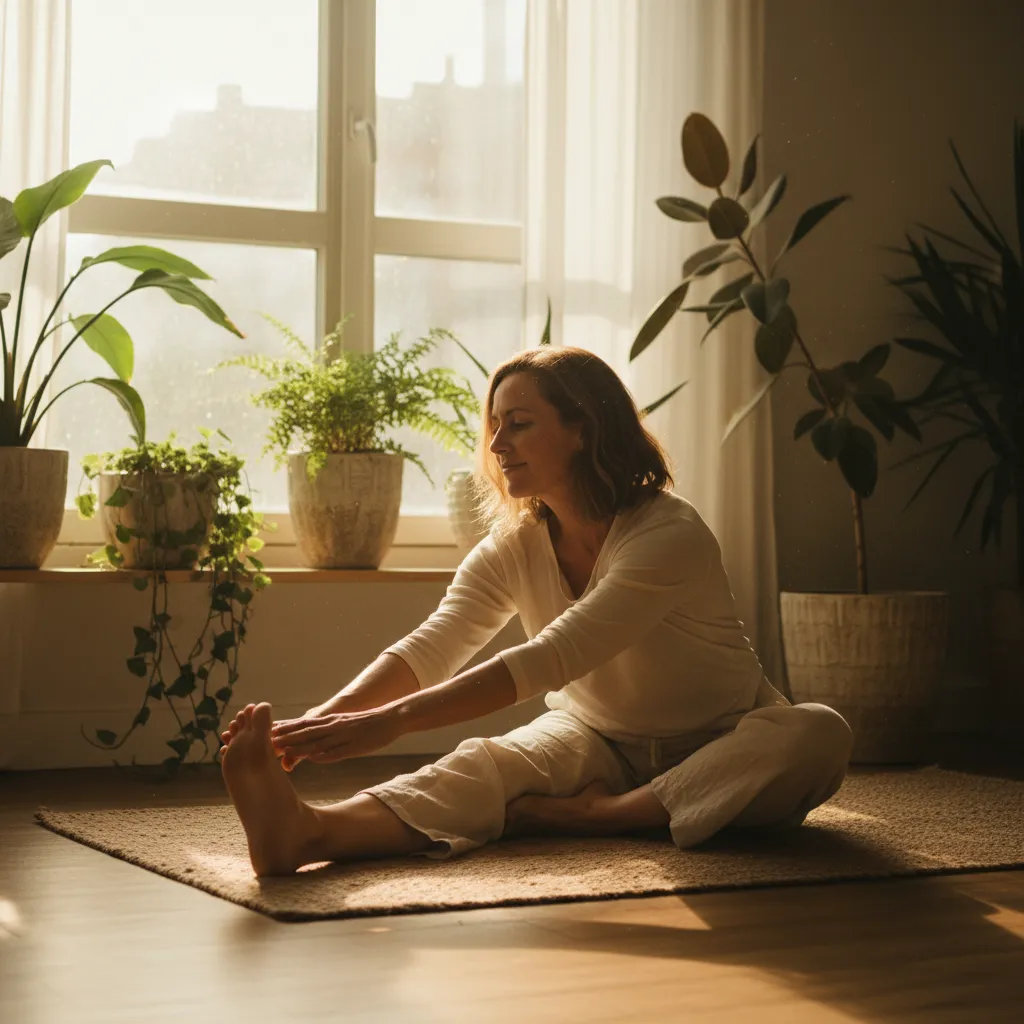
TL;DR – Quick Summary
- 20 minutes of restorative yoga in the evening significantly improved sleep onset and reduced nighttime awakenings in women aged 40–65 after just 8 weeks
- The yoga protocol specifically targeted the parasympathetic nervous system — forward folds, supine twists, and legs-up-the-wall pose were most effective
- Perimenopausal women showed the greatest benefit, suggesting yoga directly counteracts the cortisol dysregulation driving midlife sleep disruption
A randomized controlled trial published in the Journal of Clinical Sleep Medicine found that women aged 40–65 who practiced a structured 20-minute restorative yoga sequence 5 evenings per week reported significantly better sleep onset, fewer nighttime awakenings, and improved overall sleep quality after 8 weeks compared to a control group. The benefits were particularly pronounced in women experiencing perimenopausal symptoms, suggesting the practice targets the cortisol dysregulation and nervous system hyperarousal that commonly disrupts sleep during this hormonal transition.
Twenty minutes is enough. You don't need a full practice — you need the right practice at the right time of day.
Source: Healthline →
Sleep disruption is one of the most universally reported complaints among women in their 40s and 50s — and one of the most clinically complex. The causes are multifactorial: declining progesterone reduces the sedative effect that hormone had on the nervous system; cortisol rhythms shift; hot flashes interrupt sleep architecture; and the psychological load of midlife — careers, caregiving, aging parents — creates a baseline of mental hyperarousal that makes falling and staying asleep genuinely difficult.
Pharmaceutical sleep aids carry real risks for long-term use, including dependency and cognitive effects that concern many women. This is partly why the research community has increasingly turned its attention to behavioral and movement-based interventions — and yoga’s track record in this domain is becoming difficult to ignore.
What the Trial Measured
The 8-week randomized controlled trial enrolled 67 women between 40 and 65, half of whom reported perimenopausal symptoms including irregular cycles, hot flashes, or sleep complaints. The yoga group followed a structured protocol of 20-minute restorative sequences each evening, guided via video and centered on poses known to activate the parasympathetic nervous system: supported child’s pose, supine spinal twist, forward fold over bolsters, and legs-up-the-wall (viparita karani). The control group continued normal activity.
After 8 weeks, the yoga group reported significantly better scores on the Pittsburgh Sleep Quality Index — the standard clinical tool for measuring subjective sleep quality. They fell asleep faster (average improvement: 9 minutes), woke fewer times during the night, and rated morning alertness higher. Actigraphy data — movement-tracking worn on the wrist overnight — corroborated the self-reported improvements with objective reduction in nighttime movement.
The Hormonal Connection
The perimenopausal subgroup showed the most dramatic improvement, which researchers suggest reflects yoga’s direct effect on cortisol regulation. During perimenopause, the hypothalamic-pituitary-adrenal (HPA) axis becomes less responsive to feedback signals, resulting in elevated evening cortisol that conflicts with the natural decline needed for sleep onset. Slow, breath-focused yoga poses appear to reset this pattern — research using salivary cortisol measurements has consistently found that 20–30 minutes of restorative yoga reduces evening cortisol by 15–25% compared to quiet sitting.
This is the mechanism that distinguishes yoga from general stretching or light exercise at this time of day: the combination of breath control, inversions, and parasympathetic-activating poses creates a measurable hormonal shift rather than simply relaxing muscles.
Starting a Practical Routine
The evening sequence used in the trial is reproducible without equipment beyond a yoga mat and a pillow. A structured 20-minute sequence — 3 minutes of diaphragmatic breathing, 5 minutes in supported child’s pose, 4 minutes in supine twist each side, and 5 minutes of legs-up-the-wall — covers the core elements. Consistency matters more than duration: the 8-week timeframe in the study reflects the time required for the nervous system to adapt and for cortisol patterns to shift.
For women whose sleep disruption is significantly impacting daily function, yoga works best alongside evaluation of sleep hygiene, room temperature (particularly relevant for hot flashes), and, where appropriate, medical assessment of underlying sleep disorders. But as a low-risk, accessible first intervention with a growing evidence base, a 20-minute evening practice offers a genuine starting point.