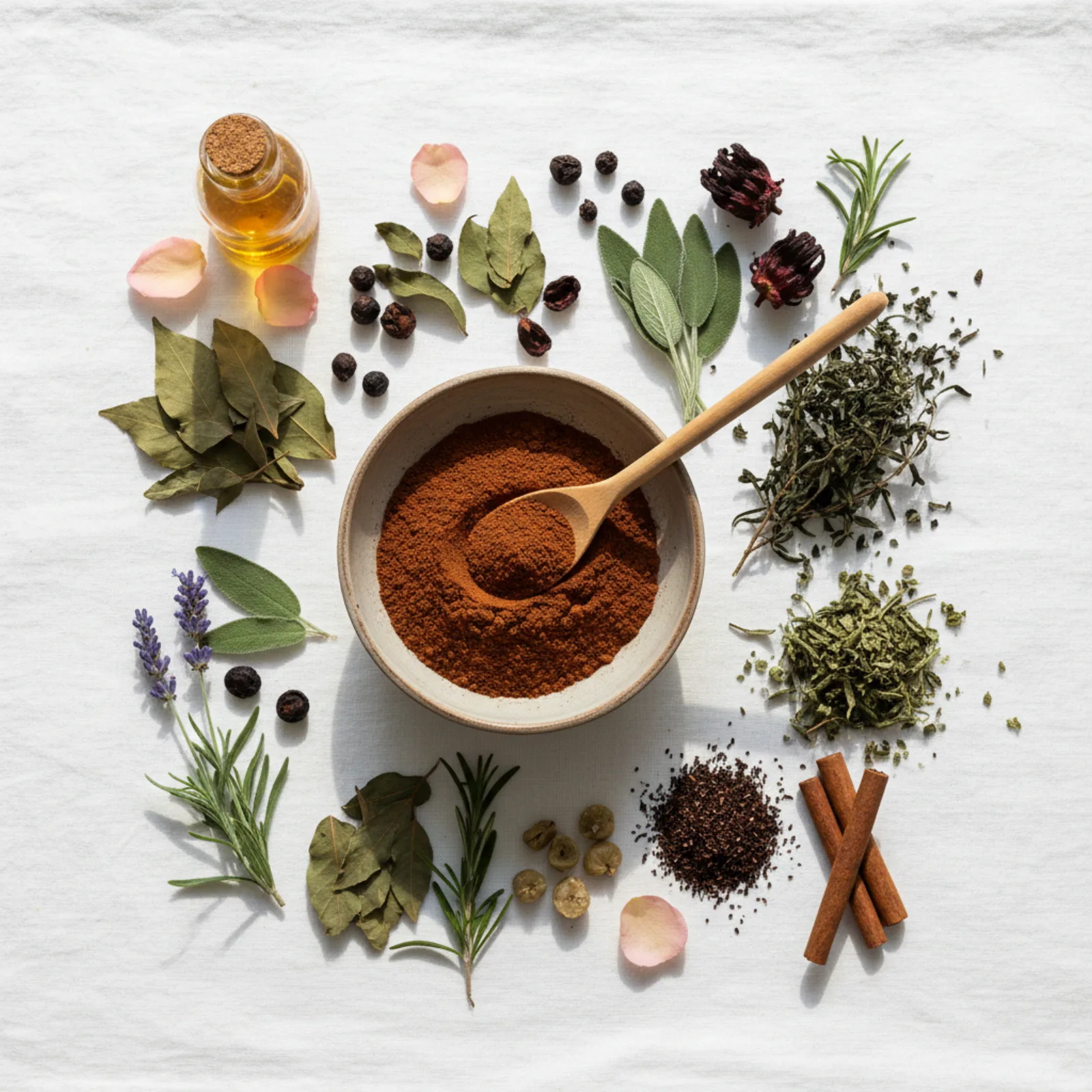
Natural Hair Dye Guide: Safe, Chemical-Free Options for Beautiful Color
Natural Hair Dye Guide: Safe, Chemical-Free Options for Beautiful Color
You want color — but you’ve read the labels. Ammonia. Resorcinol. P-phenylenediamine (PPD). If those ingredient lists make you pause, you’re not alone. More and more women are looking for ways to refresh their color without the chemical load that comes with conventional box dye.
The good news: nature has been dyeing hair for thousands of years. Henna has been used in South Asia and North Africa for over 5,000 years (Source: https://www.britannica.com/topic/henna). Today, a growing toolkit of plant-based options gives you real color results — warm reds, soft highlights, deeper brunettes — with far fewer trade-offs.
This guide covers the most effective natural hair dye methods, who they work best for, step-by-step instructions, and honest pros and cons so you can choose what fits your hair and your life.
Why Skip the Chemical Dye?
Conventional permanent hair dyes typically use ammonia to open the hair cuticle, hydrogen peroxide to strip natural pigment, and synthetic colorants (often PPD-based) to deposit new color. The US National Toxicology Program lists some aromatic amines found in hair dyes as potentially carcinogenic at high occupational exposure levels (Source: https://ntp.niehs.nih.gov/whatwestudy/topics/hairDyes/index.html).
For most occasional users, risk is low. But for women who color every 4–6 weeks over decades, or who have sensitive skin, eczema, or scalp psoriasis, reducing chemical exposure makes sense.
Natural dyes offer:
- No ammonia or peroxide — cuticle stays intact, less breakage
- Conditioning side effects — henna and indigo add protein-binding benefits to hair strands
- Gradual, buildable results — subtle color that doesn’t create a harsh root line
- Sustainability — plant-based production has a lower environmental footprint than synthetic pigment manufacturing
The trade-off: natural dyes work differently than chemical dyes. They deposit color on top of the hair shaft rather than penetrating it, which means they can’t lift dark hair to platinum blonde. They work best to enhance, deepen, or add warmth to your existing color.
The Main Natural Hair Dye Options
1. Henna (Lawsonia inermis) — Best for Warm Reds and Auburn
Henna is the gold standard of natural hair dye. The dried leaves of the Lawsonia inermis plant contain lawsone, a molecule that bonds with the keratin in your hair (Source: https://www.ncbi.nlm.nih.gov/pmc/articles/PMC3250765/). The result is a semi-permanent orangey-red to auburn color that can last 4–6 weeks.
Who it works for: Brunettes and redheads get the richest results. On very dark brown or black hair, henna adds a subtle reddish sheen in sunlight. On blonde or light brown hair, expect brighter copper tones.
Important: Only use 100% pure henna (sometimes labeled “body art quality” or “BAQ henna”). Black henna is not real henna — it typically contains PPD, the same chemical found in conventional dye, and can cause severe allergic reactions (Source: https://www.fda.gov/cosmetics/cosmetic-products/temporary-tattoos-henna-tattoos-and-kohl).
How to use henna:
- Mix henna powder with warm water to the consistency of thick yogurt. Many people add a tablespoon of lemon juice or apple cider vinegar to help release the dye molecule — this step takes 8–12 hours (leave the paste covered at room temperature overnight).
- Divide clean, dry hair into sections.
- Wearing gloves, apply the paste from roots to ends, making sure every strand is coated.
- Cover with a plastic cap and wrap a warm towel around your head.
- Leave on for 2–4 hours (longer = deeper, more lasting color).
- Rinse thoroughly with water — no shampoo for 48 hours to let the color oxidize and deepen.
Pros: Long-lasting, conditions hair, bonds strongly to hair protein, no developer needed. Cons: Orange-red tones only (without indigo), stains skin and surfaces, difficult to color over with chemical dye later.
2. Indigo (Indigofera tinctoria) — For Dark Browns and Blue-Blacks
Indigo is henna’s partner for achieving brunette and dark shades. Used alone, indigo gives a blue-toned color on grey or light hair. Combined with henna in a two-step process, it creates a full range of chestnut, dark brown, and near-black shades.
Two-step method for brunettes:
- Apply henna first (as above) and rinse.
- Mix indigo powder with warm water (no acid — acid prevents indigo from working). Apply to hair immediately, cover, and leave for 1–2 hours.
- Rinse with water.
The henna creates a warm base; the indigo layered on top produces cool brown tones. More indigo relative to henna = darker, cooler result.
One-step method (for dark brown): Mix henna and indigo powders together in a 1:2 ratio (henna:indigo), apply as one paste. Results are less intense but more convenient.
Pros: Covers grey well when combined with henna, no harsh chemicals, produces true brunette shades. Cons: Requires planning (two-step process), indigo fades faster than henna, results vary by starting hair color.
3. Chamomile — Gentle Highlights for Blondes
Chamomile flowers contain apigenin and other flavonoids that gently lift and brighten light hair with repeated use (Source: https://www.ncbi.nlm.nih.gov/pmc/articles/PMC5429933/). This is not a dramatic color change — think of it as a natural sun-kissed brightener for blonde and light brown hair.
How to use:
- Steep 4–6 chamomile tea bags (or 1/2 cup dried flowers) in 2 cups boiling water for 20–30 minutes. Let cool slightly.
- Pour or spray the rinse through clean, damp hair.
- Sit in sunlight for 30–60 minutes for enhanced lightening, or simply leave on for an hour, then rinse out.
- Repeat weekly for gradual brightening.
Pros: Incredibly gentle, great for fine or damaged hair, conditions as it brightens. Cons: Very subtle results (takes multiple applications), no effect on dark hair.
4. Black Tea and Coffee — Depth and Shine for Brunettes
Strong black tea or coffee can temporarily darken hair and add shine. The tannins in tea and coffee bind loosely to the hair shaft, depositing a subtle warm-brown tint (Source: https://www.healthline.com/health/coffee-for-hair).
How to use:
- Brew 2–3 cups of very strong black tea or espresso-strength coffee. Let cool.
- After shampooing, pour the tea or coffee through your hair, saturating it completely.
- Leave on for 20–60 minutes under a shower cap.
- Rinse with cool water.
Results last 1–2 shampoos — this is a temporary gloss treatment, not a lasting dye. Great for adding warmth and shine between henna sessions.
Pros: Zero preparation, uses pantry ingredients, great for a fast refresh. Cons: Very temporary, minimal color impact.
5. Beet and Carrot Juice — Temporary Red and Copper Tones
Beet juice imparts a pink-to-magenta tint; carrot juice gives warm copper. Both are temporary (a few shampoos) and work best on lighter hair where the pigment is visible.
How to use:
- Mix equal parts beet or carrot juice with a carrier oil (coconut or olive oil) — the oil helps the pigment deposit and conditions hair.
- Apply to clean, damp hair, focusing on the lengths.
- Cover with a plastic cap and leave for 1–2 hours.
- Rinse thoroughly.
Pros: Fun for experimenting with color, zero commitment, deeply conditioning with oil added. Cons: Stains towels and pillowcases, fades quickly, unpredictable on darker hair.
Safety Tips — What to Watch For
Natural does not automatically mean risk-free.
- Always patch test. Even pure henna can cause reactions in people with G6PD deficiency — a genetic condition more common in women of Mediterranean, African, and South Asian descent (Source: https://www.ncbi.nlm.nih.gov/books/NBK470/). Do a patch test 48 hours before full application.
- Avoid black henna entirely. It contains PPD, which causes severe contact dermatitis and can sensitize you permanently to PPD in any product (Source: https://www.fda.gov/cosmetics/cosmetic-products/temporary-tattoos-henna-tattoos-and-kohl).
- Henna is difficult to reverse. It bonds permanently to hair protein. If you plan to chemically dye your hair in the future, consult a professional colorist before applying henna — chemical dye over henna can cause unpredictable reactions and breakage.
- Source quality matters. Buy henna and indigo from reputable suppliers who test for heavy metal contamination. Some low-cost imports have been found to contain lead or other adulterants (Source: https://www.fda.gov/cosmetics/cosmetic-products/henna).
Natural Hair Dye vs. Chemical Dye: Honest Comparison
| Natural Dye | Chemical Dye | |
|---|---|---|
| Color range | Warm reds, brunettes, subtle highlights | Full spectrum including bleaching |
| Grey coverage | Good with henna + indigo | Excellent |
| Duration | 4–6 weeks (henna), 1–2 washes (tea/beet) | 4–6 weeks |
| Hair condition | Often improves | Can cause dryness/breakage |
| Allergy risk | Low (pure henna); high (black henna) | Moderate (PPD, resorcinol) |
| Ease of use | Longer process, messier | Straightforward, predictable |
| Reversible | No (henna) | Somewhat (color correction possible) |
Getting Started: Our Recommendation
If you’re new to natural hair dye, start with chamomile rinses or a black tea gloss — zero commitment, zero learning curve. Once you’re comfortable, try a henna application for your first real color shift. Follow our Natural Beauty & Skincare hub for more DIY tutorials, ingredient deep-dives, and product guides.
The shift to chemical-free hair care is a gradual one. Every step you take — even a weekly chamomile rinse — is a move toward healthier hair and a cleaner routine.
Sources
- Henna history and use: https://www.britannica.com/topic/henna
- Lawsone and keratin binding: https://www.ncbi.nlm.nih.gov/pmc/articles/PMC3250765/
- FDA on black henna / PPD risk: https://www.fda.gov/cosmetics/cosmetic-products/temporary-tattoos-henna-tattoos-and-kohl
- NTP hair dye research: https://ntp.niehs.nih.gov/whatwestudy/topics/hairDyes/index.html
- Chamomile flavonoids and hair: https://www.ncbi.nlm.nih.gov/pmc/articles/PMC5429933/
- Coffee for hair overview: https://www.healthline.com/health/coffee-for-hair
- G6PD deficiency and henna: https://www.ncbi.nlm.nih.gov/books/NBK470/
- FDA on henna quality/adulterants: https://www.fda.gov/cosmetics/cosmetic-products/henna