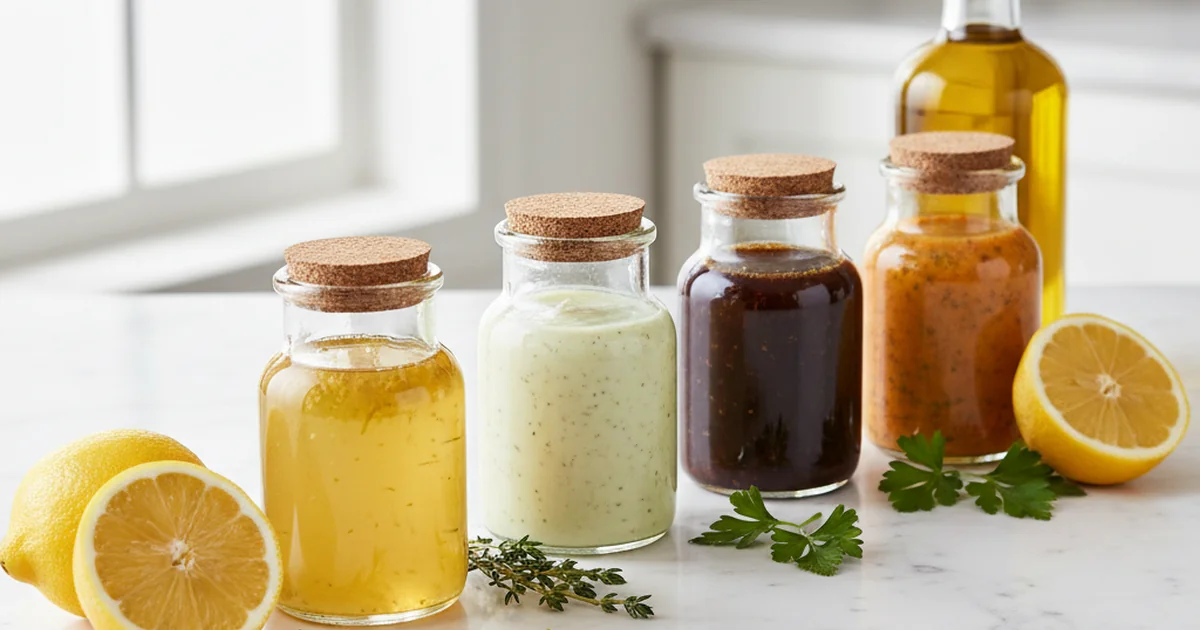
Healthy Homemade Salad Dressing Recipes
For many health-conscious women and busy moms, the “salad trap” is a common frustration. You spend time sourcing organic kale, crisp cucumbers, and nutrient-dense seeds, only to drizzle the entire bowl with a store-bought dressing that contains soybean oil, high-fructose corn syrup, and artificial preservatives. In an instant, a nutrient-dense meal becomes a vehicle for inflammatory seed oils and hidden sugars.
Creating your own healthy salad dressings is one of the simplest and most impactful pivots you can make in your kitchen. Not only do you eliminate toxic additives, but you also gain total control over the quality of your fats—opting for heart-healthy extra virgin olive oil or avocado oil instead of processed vegetable oils.
Why Homemade is Better Than Store-Bought
When you flip over a commercial dressing bottle, the ingredient list often reads like a chemistry textbook. Most mass-produced dressings rely on “seed oils” (like canola, soy, or corn oil), which are highly processed and can contribute to systemic inflammation. Furthermore, the “low-fat” versions often replace healthy fats with thickeners, cornstarch, and sugar to maintain flavor.
By switching to DIY versions, you prioritize:
- Whole-Food Ingredients: You use real lemons, apple cider vinegar, and raw honey.
- Anti-Inflammatory Fats: Using cold-pressed oils supports brain health and hormone regulation, which is especially critical for women managing PCOS or general wellness.
- Customizable Nutrition: You can boost your dressings with superfoods like nutritional yeast, hemp seeds, or fresh turmeric.
- Environmental Impact: Reducing plastic bottle waste by using reusable glass jars.
If you are looking to incorporate more healing meals into your routine, explore more in our Recipes Hub for a variety of nutrient-dense options.
The Anatomy of a Perfect Healthy Dressing
You don’t need to be a chef to create restaurant-quality dressings. Most healthy salad dressings follow a basic ratio that ensures a balance of acidity, richness, and flavor. The gold standard for a basic vinaigrette is typically 3 parts oil to 1 part acid (Quelle: https://www.seriouseats.com/how-to-make-vinaigrette-salad-dressing).
The Base: Healthy Fats
The oil provides the “body” of the dressing and helps your body absorb fat-soluble vitamins (A, D, E, and K) from your vegetables (Quelle: https://www.hsph.harvard.edu/nutritionsource/healthy-fats/).
- Extra Virgin Olive Oil (EVOO): The classic choice for heart health.
- Avocado Oil: Great for a neutral taste and high smoke point.
- Tahini or Cashew Butter: Ideal for creamy dressings without using dairy.
The Zing: Acids
Acidity cuts through the fat and wakes up the flavor of the greens.
- Apple Cider Vinegar (ACV): Excellent for blood sugar regulation (Quelle: https://my.clevelandclinic.org/health/diseases/inflammation).
- Fresh Lemon or Lime Juice: Adds brightness and a dose of Vitamin C.
- Balsamic or Red Wine Vinegar: Provides a deeper, sweeter profile.
The Emulsifiers: Binding it Together
To prevent your oil and vinegar from separating instantly, use an emulsifier.
- Dijon Mustard: A classic binder that adds a sharp kick.
- Honey or Maple Syrup: Adds a touch of sweetness and helps the dressing cling to the leaves.
- Miso Paste: Adds a salty, fermented depth and acts as a thickener.
The Flavor Boosters
This is where you can get creative based on the season or the specific salad you are making.
- Fresh Herbs: Parsley, cilantro, basil, or dill.
- Aromatics: Minced garlic, shallots, or ginger.
- Seasonings: Sea salt, cracked black pepper, smoked paprika, or cumin.
5 Essential Healthy Salad Dressing Recipes
Whether you are prepping lunches for the kids or creating a sophisticated dinner salad, these five recipes cover every flavor profile you need.
1. The Every-Day Lemon Vinaigrette
This is the “workhorse” of healthy salad dressings. It is light, bright, and pairs perfectly with everything from arugula to roasted root vegetables.
- Ingredients: 1/2 cup extra virgin olive oil, 1/4 cup fresh lemon juice, 1 tsp Dijon mustard, 1 clove minced garlic, salt and pepper to taste.
- Method: Whisk all ingredients in a bowl or shake in a mason jar until emulsified.
- Best for: Spring mixes, Greek salads, or steamed asparagus.
2. Creamy Avocado-Lime Dressing (Dairy-Free)
For those who crave a creamy texture but want to avoid processed creams or heavy mayo, avocado is the perfect solution.
- Ingredients: 1 ripe avocado, 1/4 cup lime juice, 1/4 cup olive oil, 1/2 cup water (to thin), 1/2 tsp cumin, a handful of fresh cilantro.
- Method: Blend all ingredients in a high-speed blender until smooth. Adjust water for your desired consistency.
- Best for: Taco salads, quinoa bowls, or as a dip for raw veggie sticks.
3. Anti-Inflammatory Turmeric-Ginger Dressing
Perfect for wellness enthusiasts, this dressing incorporates powerful roots known for reducing inflammation in the body.
- Ingredients: 1/3 cup apple cider vinegar, 2/3 cup avocado oil, 1 tsp ground turmeric, 1 tsp freshly grated ginger, 1 tbsp maple syrup, pinch of black pepper (to activate the turmeric).
- Method: Shake vigorously in a jar. Let it sit for 10 minutes for the flavors to meld.
- Best for: Massaged kale salads or shredded carrots and cabbage.
4. Maple Balsamic Glaze
This dressing brings a touch of sweetness and sophistication, making it a favorite for children who may be hesitant about “green” salads.
- Ingredients: 1/4 cup balsamic vinegar, 1/4 cup olive oil, 1 tbsp maple syrup, 1 tsp Dijon mustard, salt and pepper.
- Method: Whisk until the maple syrup is fully integrated.
- Best for: Spinach salads with strawberries and goat cheese or sliced pears.
5. Savory Tahini-Lemon Dressing
Tahini is a nutritional powerhouse, providing healthy fats and minerals (Quelle: https://www.mayoclinic.org/healthy-lifestyle/nutrition-and-healthy-eating/basics/nutrition-basics/hlv-20049477). This dressing is thick, rich, and incredibly satisfying.
- Ingredients: 1/4 cup runny tahini, 2 tbsp lemon juice, 1 tbsp maple syrup, 1 clove garlic (minced), 2-4 tbsp warm water.
- Method: Stir tahini and lemon together first (it may thicken), then slowly whisk in warm water until creamy.
- Best for: Roasted cauliflower, falafel bowls, or hearty grain salads.
Storage and Meal Prep Tips
One of the biggest hurdles to making homemade dressings is the perceived effort of doing it every day. However, these can be easily prepped for the week.
Glass is King: Always store your dressings in glass jars (like Mason jars). Acidic ingredients like vinegar and lemon juice can react with plastic or metal over time, altering the taste and potentially leaching chemicals into your food. To make the process easier, you can invest in a set of high-quality glass storage containers to keep your fridge organized.
The Shelf-Life Rule:
- Vinaigrettes: Since they are mostly oil and vinegar, they can last up to 2 weeks in the refrigerator (Quelle: https://www.fda.gov/food/buy-store-serve-safe-food/safe-food-storage).
- Creamy/Fresh Dressings: Dressings containing avocado, fresh herbs, or tahini typically last 3–5 days (Quelle: https://www.fda.gov/food/buy-store-serve-safe-food/safe-food-storage). If the avocado dressing begins to brown slightly, a squeeze of extra lime juice can often refresh it.
Pro Tip for Busy Moms: Make a “double batch” on Sunday. Store the base (oil and acid) in the fridge and add your fresh herbs or garlic just before serving to keep the flavors vibrant.
Pairing Your Dressing with the Right Greens
Not all dressings work with all salads. To elevate your meals, match the “weight” of the dressing to the “weight” of the greens.
- Light Greens (Arugula, Spinach, Butter Lettuce): Use light vinaigrettes like the Lemon Vinaigrette. Heavy dressings will wilt these delicate leaves almost instantly.
- Hearty Greens (Kale, Collard Greens, Chard): These require a “massage.” Pour your dressing (like the Turmeric-Ginger) over the kale and literally massage it with your hands for 2-3 minutes (Quelle: https://www.seriouseats.com/how-to-massage-kale). This breaks down the tough cellulose fibers, making the salad easier to digest and more flavorful.
- Grain Bowls (Quinoa, Farro, Brown Rice): These can handle the heavier, creamier options like Tahini or Avocado-Lime, as the grains soak up the richness.
Common Questions About Healthy Dressings
Can I use honey instead of maple syrup? Yes. Honey is a great natural sweetener. However, if you are following a vegan diet or looking for a lower-glycemic option, maple syrup or a small amount of date syrup is a better choice.
How do I fix a dressing that is too salty? If you overdo the salt or soy sauce, add a touch more acid (lemon juice or vinegar) or a bit of sweetness (maple syrup). This balances the flavor profile without diluting the dressing.
Is it okay to use “store-bought” ACV? Check the label. Look for “Organic” and “With the Mother.” The “mother” refers to the beneficial bacteria and enzymes that make apple cider vinegar a probiotic powerhouse.
Final Thoughts on a Natural Approach
Transitioning to healthy salad dressings is a small change that yields significant results. By removing processed seed oils and refined sugars, you are reducing the inflammatory load on your body and teaching your family to appreciate the taste of real, whole ingredients.
Start with one recipe this week—perhaps the Lemon Vinaigrette—and notice how much more vibrant your vegetables taste. Once you experience the freshness of a homemade dressing, it is very hard to go back to the bottled versions.
Sources
- Harvard T.H. Chan School of Public Health: The Truth About Fats: Saturated, Unsaturated, and Trans Fats
- Mayo Clinic: Healthy Diet: Nutrition and Healthy Eating
- Cleveland Clinic: Inflammation: What it is and how to fight it