TL;DR – Quick Summary
- Vitamins C and E protect against UV and oxidative damage
- Vitamin A (retinol) speeds up cell turnover and reduces fine lines
- Niacinamide (B3) strengthens the skin barrier and calms redness
The Question
What vitamins are actually good for skin — and is it better to eat them or apply them topically? With dozens of serums and supplements claiming to transform your skin, it helps to understand what each vitamin actually does.
The Short Answer
Vitamins C, E, A (retinol), D, and B3 (niacinamide) have the strongest evidence for skin health. They work through different mechanisms — some protect against damage, others stimulate repair or strengthen the skin barrier. Getting them through food supports skin from the inside; topical application delivers them directly where they’re needed.
The Full Answer
Vitamin C — The Collagen Builder
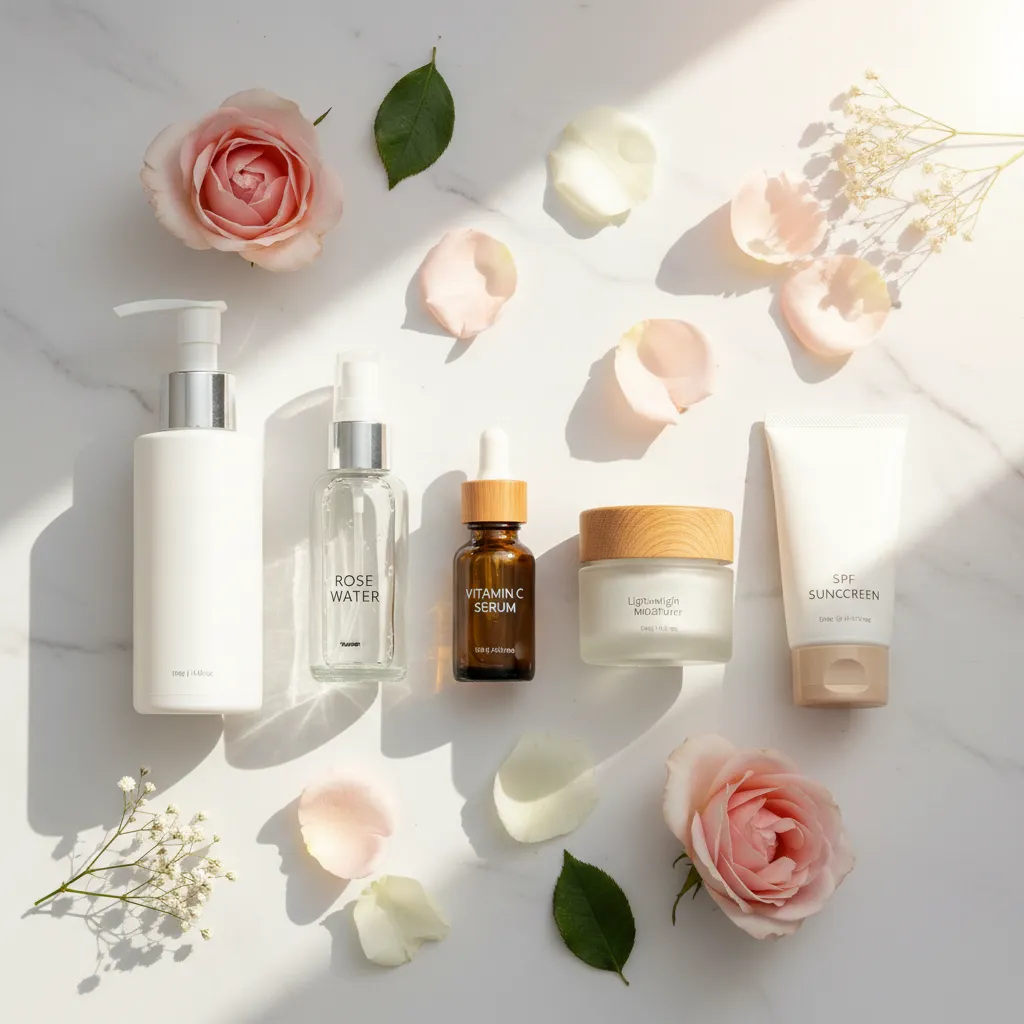
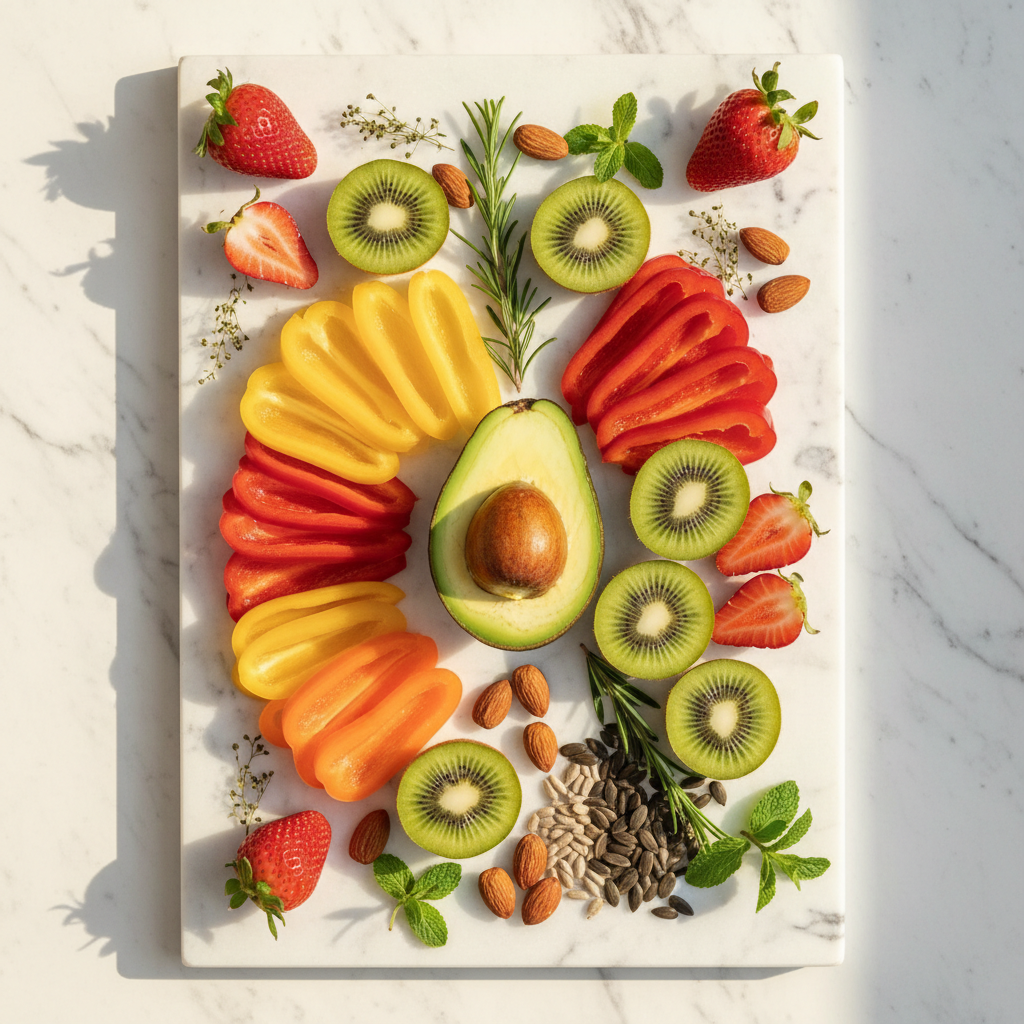
Vitamin C is essential for collagen synthesis. Your body cannot produce collagen without it, which is why severe deficiency (scurvy) causes skin breakdown. Topical vitamin C serums are one of the most well-researched skincare ingredients: they act as antioxidants that neutralize free radicals from UV exposure, and studies published in the Journal of Clinical and Aesthetic Dermatology (Pullar et al., 2017) confirm that vitamin C plays a key role in photoprotection and wound healing. Good food sources include bell peppers, citrus fruit, kiwi, strawberries, and broccoli.
Vitamin E — The Moisture Protector
Vitamin E (tocopherol) is a fat-soluble antioxidant that protects cell membranes from oxidative damage. It works synergistically with vitamin C — the two together are more effective than either alone at neutralizing free radical damage. In the skin, vitamin E is found naturally in sebum, which is why dry skin types are often more depleted. Food sources: sunflower seeds, almonds, avocado, and wheat germ oil.
Vitamin A — The Cell Turnover Driver
Vitamin A in the form of retinol or retinoids is arguably the most studied anti-aging ingredient in dermatology. It binds to retinoic acid receptors in skin cells, increasing cell turnover and stimulating collagen production. This is why prescription-strength tretinoin is a well-established treatment for fine lines and acne. Over-the-counter retinol works on the same mechanism, just more slowly. Food sources of provitamin A (beta-carotene): carrots, sweet potatoes, leafy greens, and pumpkin.
Vitamin D — The Skin Barrier Regulator
Vitamin D receptors are found throughout the skin. Research published in Nutrients (Mostafa & Hegazy, 2015) links low vitamin D levels to conditions like eczema, psoriasis, and impaired wound healing. The skin actually synthesizes vitamin D from UVB exposure, but most people in northern latitudes are deficient in winter months. Food sources: fatty fish (salmon, mackerel), egg yolks, and fortified foods.
Niacinamide (Vitamin B3) — The Barrier Strengthener
Niacinamide is one of the most versatile topical ingredients. It has been shown in multiple studies to reduce redness, minimize pore appearance, even skin tone, and strengthen the lipid layer of the skin barrier — which helps retain moisture and protect against irritants. Unlike vitamin C, niacinamide is stable and non-irritating, making it suitable for sensitive skin. It’s found in meat, fish, peanuts, and whole grains, but is most effective when applied topically.
Quick Recap
- Vitamin C builds collagen and protects against sun damage
- Vitamins A and D drive cell renewal and barrier repair
- Niacinamide (B3) and vitamin E support skin barrier and moisture retention
Related Questions
Q: Can I get enough skin vitamins from diet alone? A: For general skin health, yes — a varied diet rich in colorful vegetables, healthy fats, and protein covers the basics. Topical application is more targeted for specific concerns like fine lines or hyperpigmentation. More on DIY vitamin C →
Q: What vitamin deficiency causes dry skin? A: Low vitamin A and vitamin D are most commonly linked to dry, flaky skin. Vitamin E deficiency can also impair the skin’s ability to retain moisture. See natural moisturizing tips →
Q: Is biotin actually good for skin? A: Biotin (B7) supplements are heavily marketed for skin, hair, and nails, but current evidence suggests they only help if you have a genuine biotin deficiency — which is rare. Most people do not need to supplement unless their doctor confirms a deficiency.