TL;DR – Quick Summary
- Bakuchiol is the most studied natural retinol alternative and has clinical evidence for wrinkle reduction without irritation.
- Natural alternatives work more slowly than pharmaceutical retinol — expect 8-12 weeks for visible results.
- For sensitive skin or retinol intolerance, bakuchiol is a genuinely viable substitute.
The Question
Retinol is one of the most evidence-backed skincare ingredients that exists — decades of clinical research confirm it reduces fine lines, improves collagen production, and speeds cell turnover. But many women over 40 can’t tolerate it: it causes redness, peeling, and sensitivity, especially in perimenopause when the skin barrier is already compromised. Are natural alternatives actually worth using, or are they just expensive placebos?
The Short Answer
Bakuchiol is the only natural ingredient with genuine clinical evidence comparable to retinol — a 2018 randomized controlled trial found it reduced wrinkles and hyperpigmentation as effectively as retinol, with significantly less irritation. It’s a real alternative, not a compromise, for women who can’t tolerate retinol.
The Full Answer
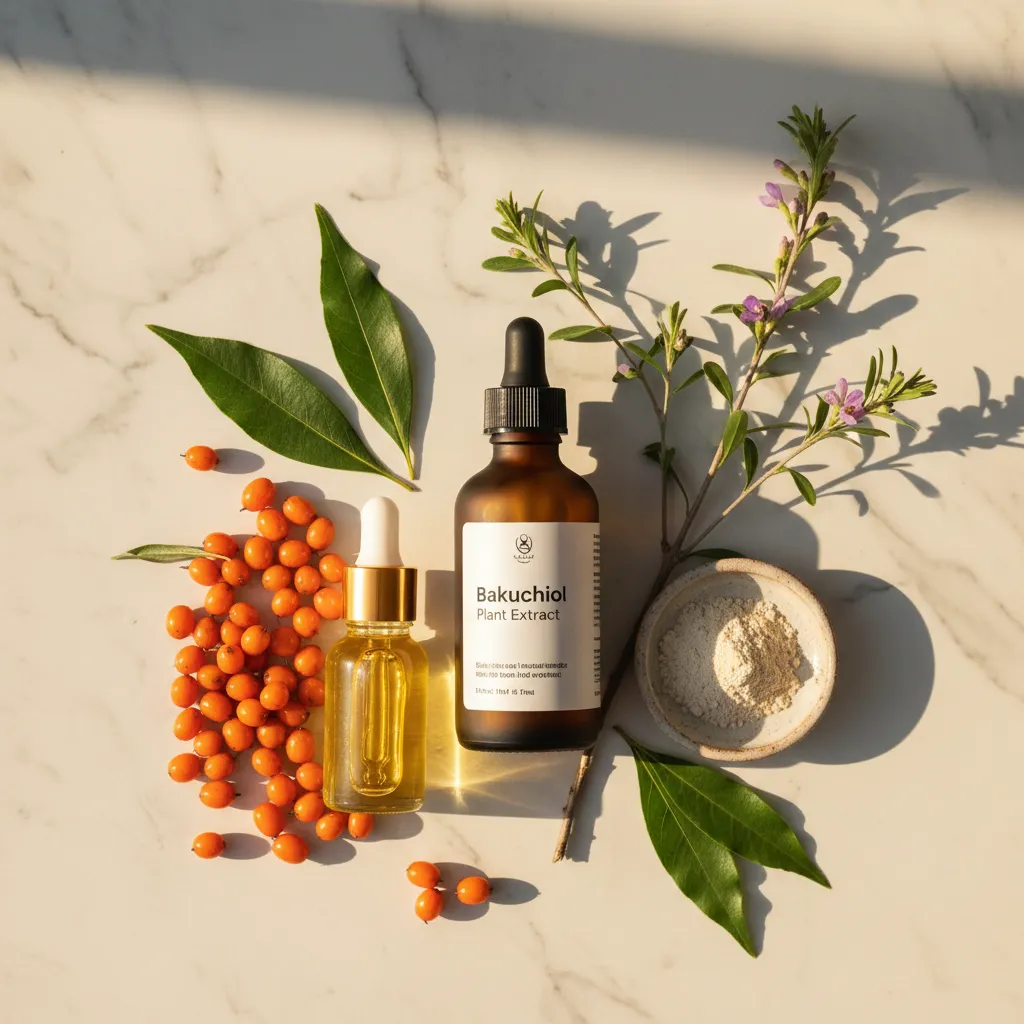
Bakuchiol — the serious contender: Extracted from the seeds of the Psoralea corylifolia plant, bakuchiol activates retinoid receptors through a different molecular pathway than retinol, producing similar downstream effects (cell turnover, collagen stimulation) without the characteristic purge and peeling. The 2018 RCT published in the British Journal of Dermatology found bakuchiol performed on par with retinol for wrinkle and hyperpigmentation reduction — with significantly less skin irritation. Subsequent studies have confirmed these findings.
Practical use: apply nightly to clean, dry skin at a concentration of 0.5–1%. Unlike retinol, bakuchiol is stable in sunlight and can be used morning or evening. Results appear in 8–12 weeks.
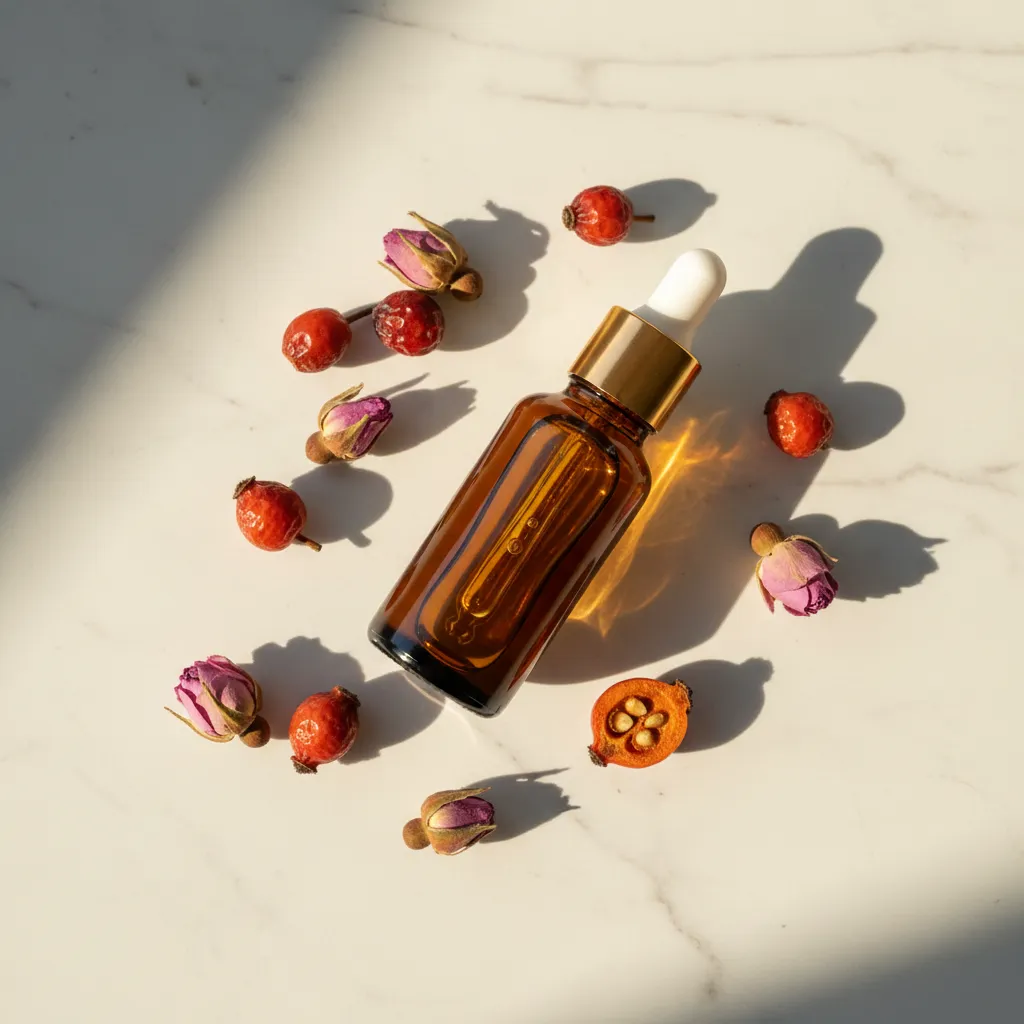
Rosehip oil — natural retinoid source: Rosehip oil contains trans-retinoic acid, a naturally occurring retinoid. The concentration is far lower than in prescription retinoids, so it works more gently and slowly — but it’s tolerable for virtually everyone. Beyond the retinoid content, rosehip is rich in linoleic acid and vitamin C precursors that support collagen production and reduce hyperpigmentation. For mature skin, rosehip and bakuchiol work well together — they address aging from different angles.
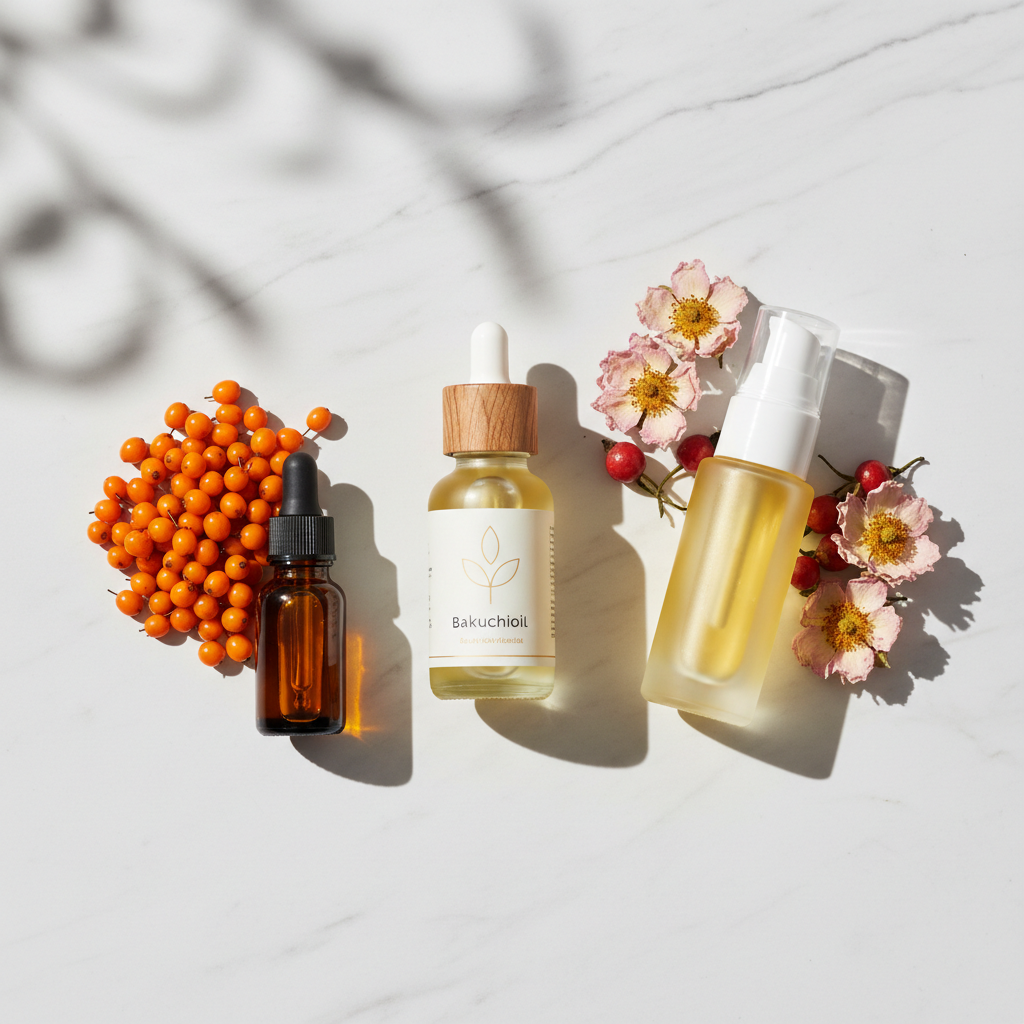
Sea buckthorn — beta-carotene and barrier support: Exceptionally high in beta-carotene (which the skin converts to vitamin A, a retinoid precursor) and palmitoleic acid (omega-7) for barrier repair. It won’t match bakuchiol’s results, but it’s a solid addition for very sensitive skin that can’t tolerate anything stronger.
Honest comparison:
| Factor | Pharmaceutical Retinol | Bakuchiol | Rosehip Oil |
|---|---|---|---|
| Speed of results | Fast (4–6 weeks) | Moderate (8–12 weeks) | Slow (12+ weeks) |
| Evidence strength | Very strong | Good (2+ RCTs) | Moderate |
| Irritation risk | Moderate to high | Low | Very low |
| Suitable for sensitive skin | Often no | Yes | Yes |
If you tolerate retinol well, there’s no reason to switch. If you’ve tried retinol and found it too harsh — or if you’re in perimenopause with reactive skin — bakuchiol is a scientifically supported alternative, not a downgrade.
Quick Recap
- Bakuchiol is the only natural retinol alternative with solid clinical evidence — it works through retinoid receptors and delivers comparable results
- Natural alternatives work more slowly than pharmaceutical retinol — expect 8–12 weeks minimum for visible changes
- For sensitive skin or retinol intolerance, bakuchiol is genuinely viable; rosehip oil complements it well