TL;DR – Quick Summary
- Blood sugar stability is the fastest lever — refined sugars disrupt insulin, which cascades to other hormones
- Sleep and stress are non-negotiable: cortisol dysregulation affects estrogen, progesterone, and thyroid function
- Specific foods and herbs (flaxseed, ashwagandha, vitex) have clinical evidence — most supplements do not
The Question
“How do I balance my hormones naturally?” is one of the most searched women’s health questions — and one of the most misunderstood. The body produces dozens of hormones, and “balance” means something different for a 28-year-old with PCOS than for a 48-year-old in perimenopause. This FAQ focuses on lifestyle-based approaches with meaningful evidence behind them.
The Short Answer
Blood sugar regulation is the single highest-leverage starting point. From there, sleep quality, stress reduction, and targeted dietary support (omega-3s, fiber, phytoestrogens) form the core evidence-based framework. A handful of herbs — notably ashwagandha and vitex — have clinical support for specific hormone-related symptoms. Most supplement blends marketed for “hormone balance” have limited evidence.
The Full Answer
1. Blood Sugar First
Chronically elevated insulin — from a diet high in refined carbohydrates and added sugars — disrupts the entire hormonal cascade. Insulin resistance promotes androgen overproduction in the ovaries (a core driver of PCOS), suppresses sex hormone-binding globulin (SHBG), and impairs thyroid function. Stabilizing blood sugar through lower-glycemic eating, adequate protein at each meal, and reducing ultra-processed foods is the most broadly applicable starting point. A 2022 review in Nutrients (Barrea et al.) confirmed that dietary glycemic load correlates with androgen levels and menstrual regularity in women with PCOS.
2. Fiber and Estrogen Clearance
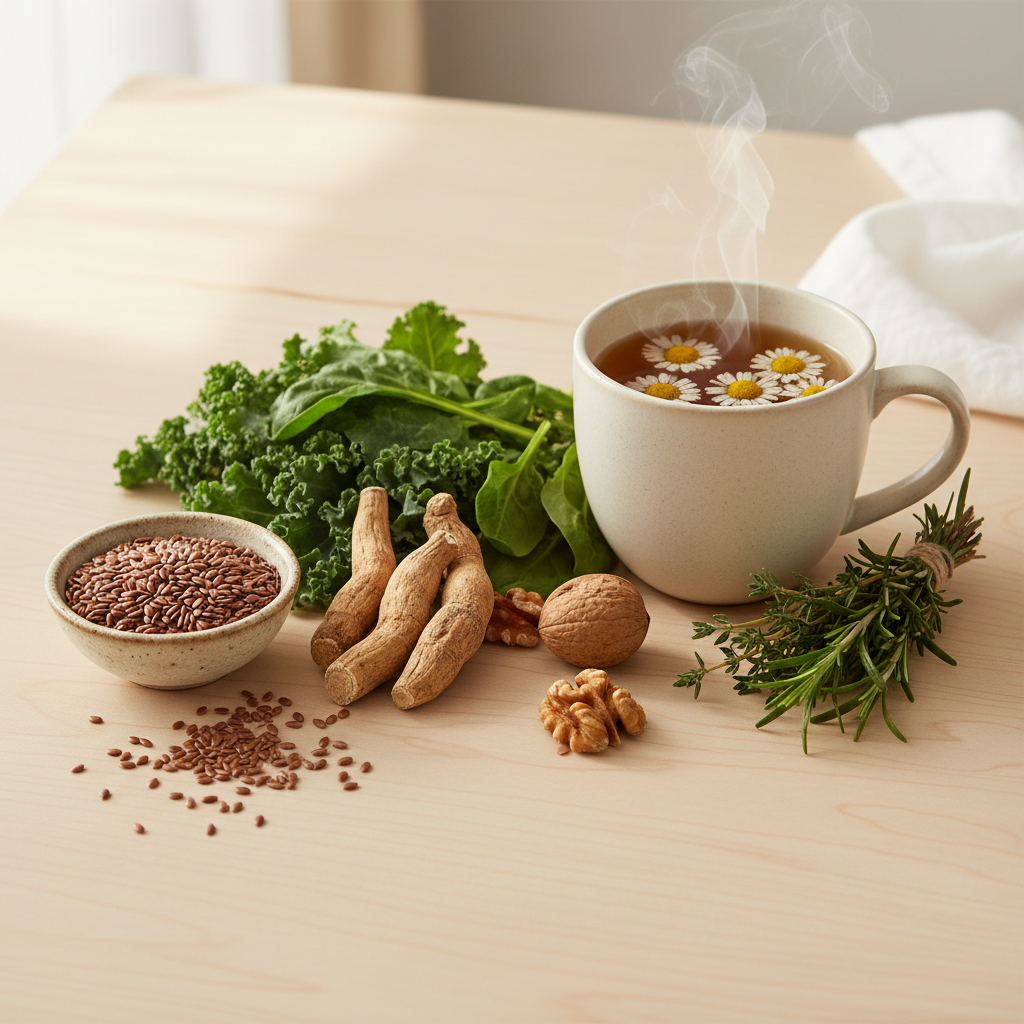
Dietary fiber — particularly from cruciferous vegetables, flaxseed, and legumes — supports estrogen detoxification. The liver converts excess estrogen into water-soluble metabolites, which are then bound by fiber in the gut for excretion. Without adequate fiber, some of these metabolites are reabsorbed. Aim for 25–35g of fiber daily from whole food sources. Flaxseed specifically contains lignans, which are phytoestrogens that can modulate estrogen receptor activity — a 2010 study in Nutrition and Cancer (Velentzis et al.) found that lignan intake was associated with lower circulating estrogen in postmenopausal women.
3. Omega-3 Fatty Acids and Inflammation
Chronic low-grade inflammation dysregulates the HPA (hypothalamic-pituitary-adrenal) axis and impairs thyroid hormone conversion. Omega-3 fatty acids from fatty fish (salmon, sardines, mackerel), walnuts, and flaxseed reduce inflammatory prostaglandins that interfere with hormone signaling. A 2020 meta-analysis in Frontiers in Physiology (Moghadam et al.) found omega-3 supplementation significantly reduced testosterone and improved menstrual regularity in women with PCOS.
4. Sleep — The Non-Negotiable
Growth hormone is secreted primarily during deep sleep. Cortisol rises sharply after even one night of poor sleep, which in turn suppresses progesterone production and impairs thyroid function. The National Sleep Foundation data consistently shows that women getting fewer than 7 hours per night have measurably higher cortisol and lower estrogen stability. Prioritizing 7–9 hours with consistent wake times is not optional for hormonal health — it’s the foundation.
5. Stress and the Cortisol-Progesterone Steal
The body uses the same precursor molecule (pregnenolone) to make both cortisol and progesterone. Under chronic stress, the demand for cortisol “steals” from progesterone production — a mechanism sometimes called the pregnenolone steal. This can shorten the luteal phase, worsen PMS, and reduce fertility. Proven cortisol-lowering strategies with consistent clinical evidence include: zone-2 cardio (150+ min/week), mindfulness-based stress reduction (MBSR), and adequate magnesium intake. Magnesium is a cofactor for cortisol metabolism, and deficiency is common in Western diets (NHANES data shows roughly 45% of US adults fall short of the RDA).
6. Specific Herbs with Clinical Evidence
Ashwagandha (KSM-66 extract): A double-blind study published in the Indian Journal of Psychological Medicine (Chandrasekhar et al., 2012) found that 300mg KSM-66 twice daily significantly reduced serum cortisol and self-reported stress scores over 60 days in chronically stressed adults.
Vitex agnus-castus (chaste tree berry): Has the best clinical evidence for PMS-related progesterone support. A 2017 systematic review in Journal of Alternative and Complementary Medicine (van Die et al.) found consistent evidence for reducing premenstrual symptoms, particularly in the luteal phase.
Seed cycling: Popular on social media, but lacks clinical trials. The proposed mechanism (different seeds in follicular vs. luteal phases) is plausible based on lignan and zinc content, but there are no published studies confirming hormone-shifting effects.
Quick Recap
- Stabilize blood sugar first — insulin disruption underlies many hormone imbalances
- Fiber (25–35g/day) and flaxseed lignans support estrogen clearance
- Sleep 7–9 hours and actively manage cortisol to protect progesterone
Related Questions
Q: Can diet alone fix hormone imbalance? A: For mild imbalances rooted in lifestyle — blood sugar dysregulation, chronic stress, poor sleep — diet changes can produce meaningful improvements. For diagnosed conditions like PCOS, thyroid disease, or perimenopause, dietary support complements but rarely replaces medical care. More on hormone-supporting foods →
Q: Does drinking more water affect hormones? A: Dehydration raises cortisol and can impair kidney clearance of hormone metabolites. Adequate hydration (roughly 2–2.5L/day for most women) supports overall hormone detoxification, though water alone won’t correct a significant imbalance. More on hydration and skin →
Q: How long does it take to see results from natural hormone support? A: Dietary and lifestyle changes typically take 2–3 full menstrual cycles (6–12 weeks) to show measurable effects on cycle regularity and symptom severity. Cortisol-related changes (energy, sleep quality) can often be felt within 3–4 weeks of consistent sleep and stress management.